Thanks for visiting! This site has moved to fearlessdream.us, where all new posts will appear! Please update your bookmarks accordigly.

The new feed URL is: http://fearlessdream.us/feed/

“The secret of happiness is freedom. The secret of freedom is courage.”
— Thucydides

“A civilization that feels guilty for everything it is and does will lack the energy and conviction to defend itself.”
— Jean-François Revel
Showing posts with label World Trade Center. Show all posts

9/11, Eleven Years On

Tuesday, September 11, 2012

What can I say about that horrific day eleven years ago, and our response in the years since, that I haven’t already written, quoted, or linked? Last year, I wrote a carefully thought-out plea to my fellow countrymen and citizens of the civilized world, arguing that it is crucial for us to open our eyes to Jihadists’ intentions and squarely face what we are up against. If you are in doubt about the danger we face, please go there and give it some thoughtful consideration. We are sabotaging ourselves — hobbling our own ability to understand, and decide what we must do to prevail against, a determined foe — and we have got to stop.

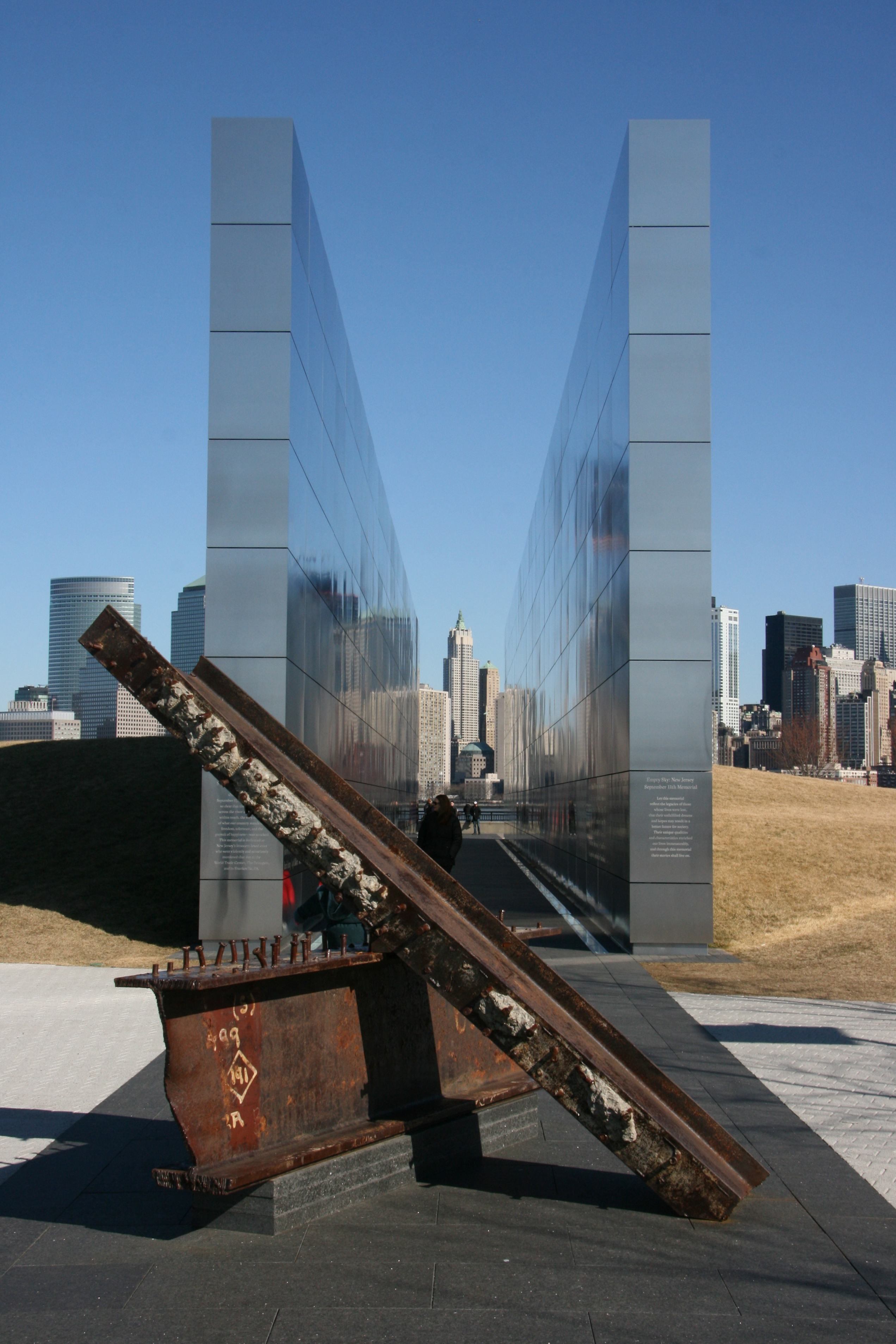
Last February, I paid the first visit of my life to the Statue of Liberty and Ellis Island. There’s a ferry to Liberty Island and Ellis Island that departs from Liberty Park, New Jersey, and at that site, next to a historic former rail station that served as a gateway to America for tens of thousands of immigrants, there now stands a stirring and fitting memorial to New Jersey’s victims of the 9/11 attacks titled “Empty Sky”.

I’m not usually a fan of the stark, industrial-modern style of memorial that has followed in the footsteps of Maya Lin’s Vietnam War Memorial, but I think what was done at Liberty Park works well.

Parallel walls, 30 feet high and as long as the Twin Towers were wide, carve out a channel that’s oriented toward the World Trade Center site. Entering the space between the walls evokes the awe-inspiring sensation of standing between the towering buildings. Meanwhile, your eye is drawn down the man-made channel toward Ground Zero, just across the Hudson — a view that tends to focus the mind.

You also find yourself in a private, contemplative space where the names of New Jersey’s 9/11 dead have been inscribed and can be read on the interior wall surfaces. I found it a fitting memorial overall — far from the cold and sterile monument one might expect from its physical description. Any possibility of that is canceled out by the pair of steel beams recovered from the World Trade Center wreckage, that sit starkly at the far end of the channel just outside the walls. If anything, the absence of human forms (one of the common characteristics of modern memorials that usually rubs me the wrong way) succeeds in evoking a sense of loss and absence — a seemingly fitting reminder of those who were taken from us that day. Also, bear in mind where this memorial sits. Anyone standing at this site on the morning of September 11th, 2001 would have had a clear view of the horror, as American Airlines Flights 11 and 175 were flown by fanatical Jihadists into the World Trade Center towers.

Empty Sky memorial and World Trade Center beams

Sighting down the channel delimited by the walls, one can see the rebuilding occurring at the World Trade Center site. One World Trade Center (formerly dubbed the “Freedom Tower”) is visible at the left edge, and 4 World Trade Center can be seen at the right.

sighting down the Empty Sky memorial, toward the World Trade Center site

Here’s what the memorial looks like from the side:

Empty Sky memorial from side

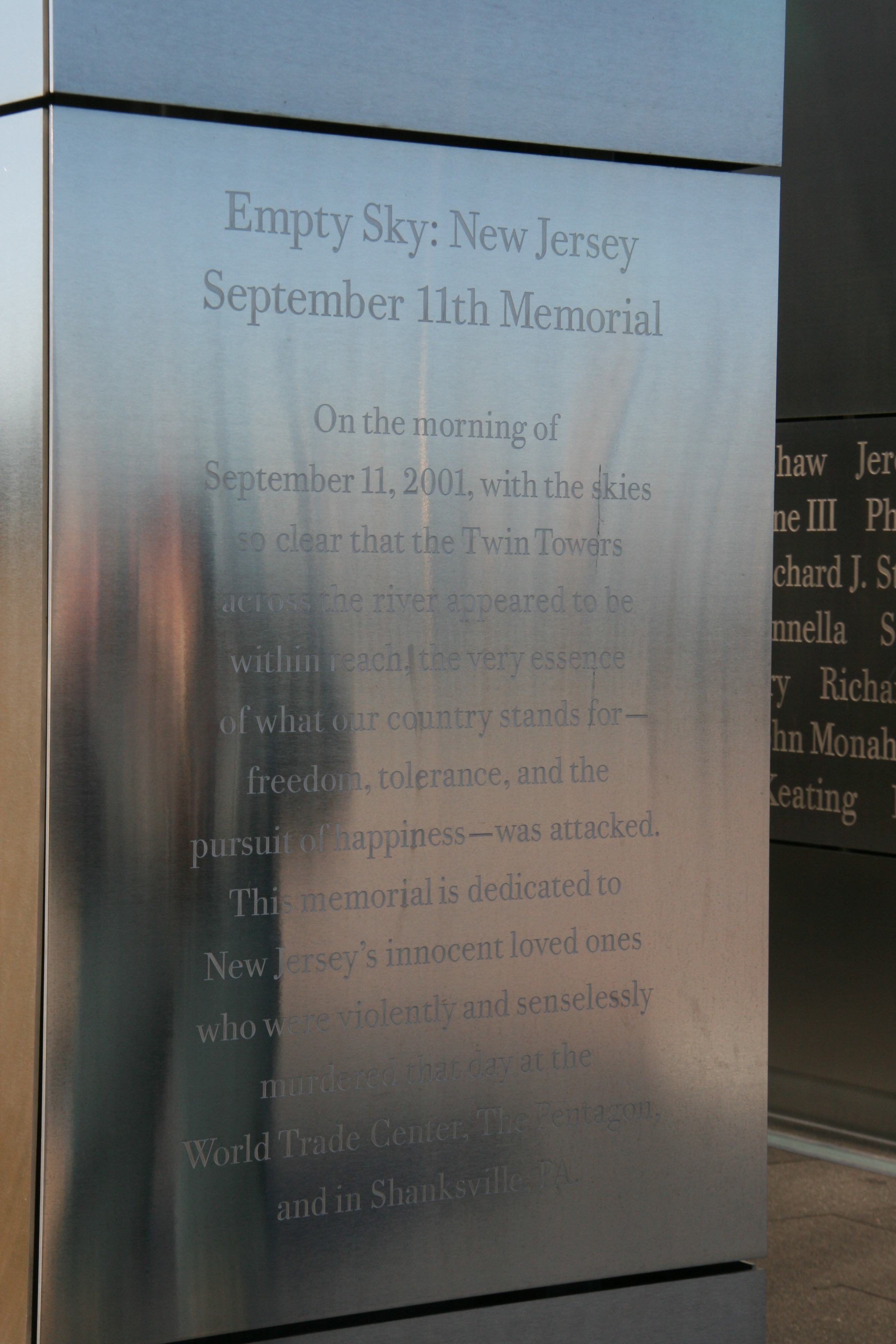
At each end, the walls are inscribed thusly:

Empty Sky memorial inscription 1

Empty Sky: New Jersey September 11th Memorial

On the morning of September 11, 2001, with the skies so clear the Twin Towers across the river appeared to be within reach, the very essence of what our country stands for — freedom, tolerance, and the pursuit of happiness — was attacked. This memorial is dedicated to New Jersey’s innocent loved ones who were violently and senselessly murdered that day at the World Trade Center, The Pentagon, and in Shanksville, PA.

Empty Sky memorial inscription 2

Let this memorial reflect the legacies of those whose lives were lost, that their unfulfilled dreams and hopes may result in a better future for society. Their unique qualities and characteristics enriched our lives immeasurably, and through this memorial their stories shall live on.

Note the fairly unflinching terms in which the attacks are described: those killed on that day were violently and senselessly murdered. Such moral clarity is too rarely seen, and welcome in my book. While it’s not clear to me how a memorial that immortalizes the victims’ names alone can succeed in helping their stories to live on, I give this design credit for getting a lot more right than wrong.

More pictures of the memorial can be found here.

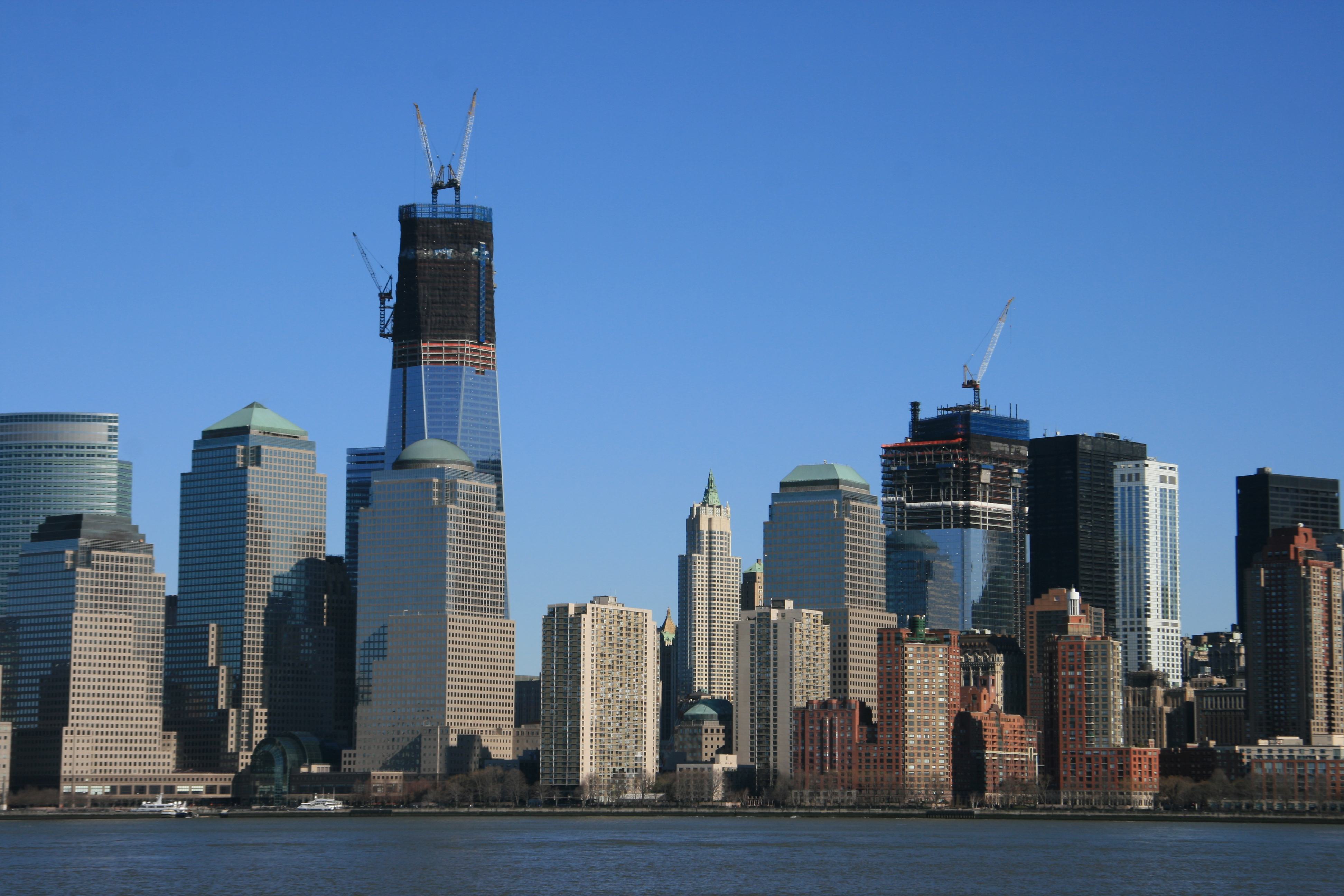
Here’s what Lower Manhattan looked like from that vantage point last February, by the way:

Lower Manhattan, from Liberty Park, New Jersey, February 20, 2012

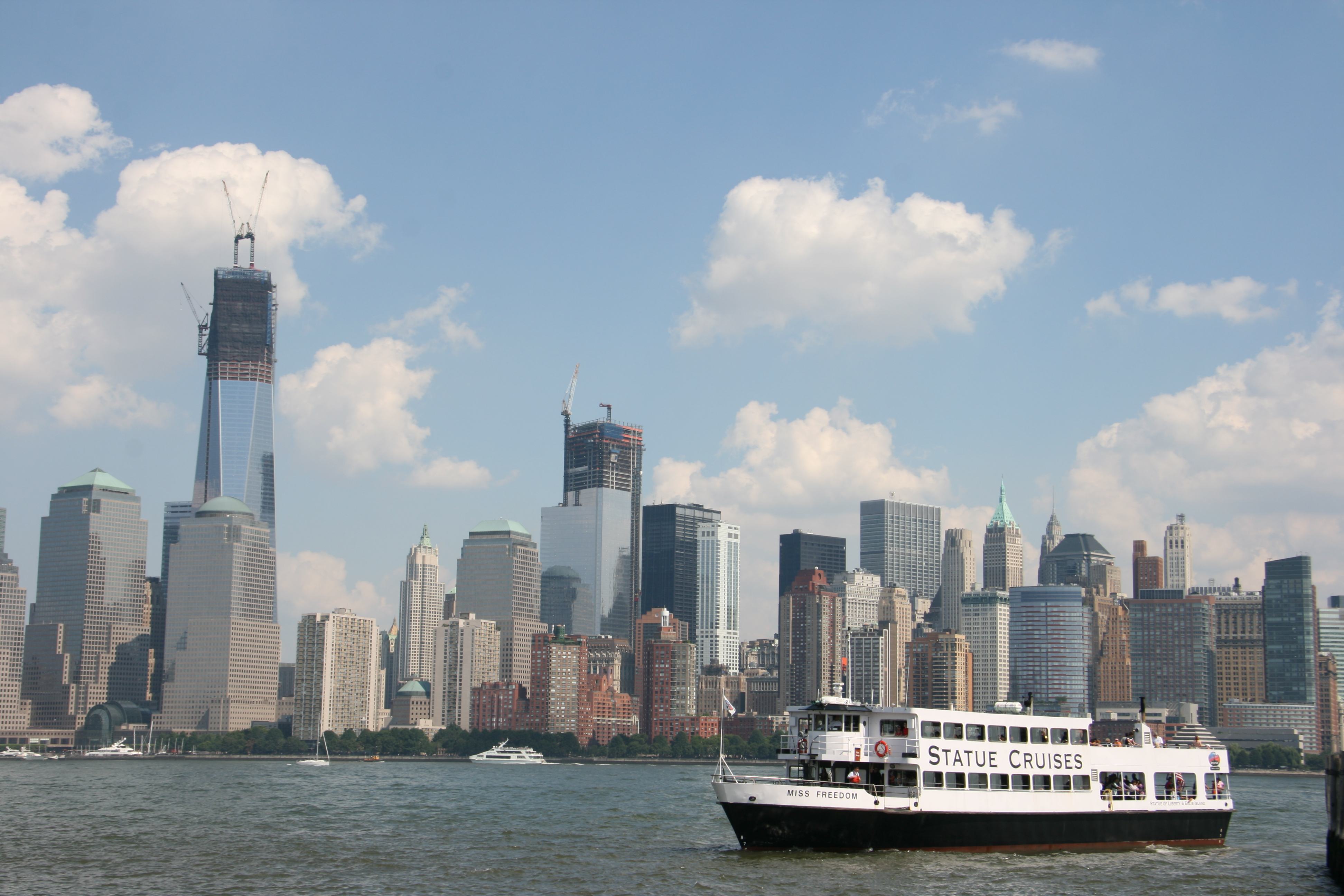
Here’s what it looked like when I visited again ten days ago, on September 1st:

Lower Manhattan, from Liberty Park, New Jersey, September 1, 2012

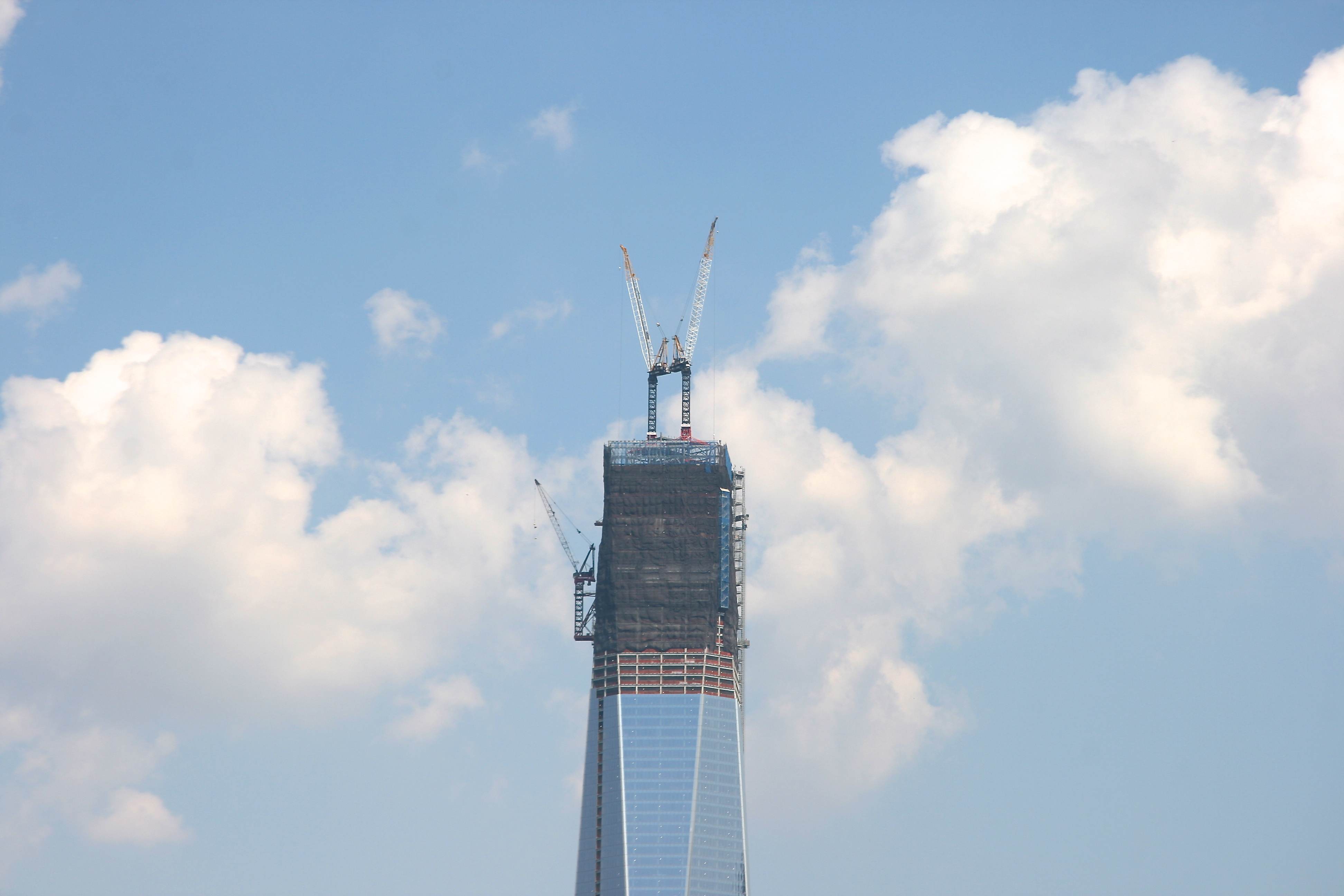
You can see clear progress on WTC 1 (left) and WTC 4, relative to the heights of the surrounding buildings. WTC 1 recently reached its symbolic final height of 1,776 feet. As I’ve written before though, it’s troubled me that it has taken us so long to rebuild at the WTC site, relative to what I know we’re capable of. The original World Trade Center towers opened 4 and 6 years after construction began. The Empire State Building, a smaller but still substantial high-rise project, was completed in a mere 410 days. During the Great Depression. We can still achieve such feats, if we choose to. Do we still have it in us?

top of WTC 1, September 1, 2012

Speaking of memorials: I have yet to visit the 9/11 memorial that is now open at the World Trade Center site. The need to obtain a ticket, and the advance planning that that requires, has only served to enable my hesitation about visiting. I visited Ground Zero two weeks after the 9/11 attacks, then again in November 2007 (and later posted some pictures from that day), but somehow the thought of visiting the completed memorial seems a different proposition. I just don’t know whether I can handle it without getting tremendously upset all over again. I’m not someone who needs convincing about the sorrow and grave implications of that day, and I don’t think I would find any solace there. But I know I’ll probably end up overcoming all that and visiting someday, and when I finally do, I’ll write about the experience here.

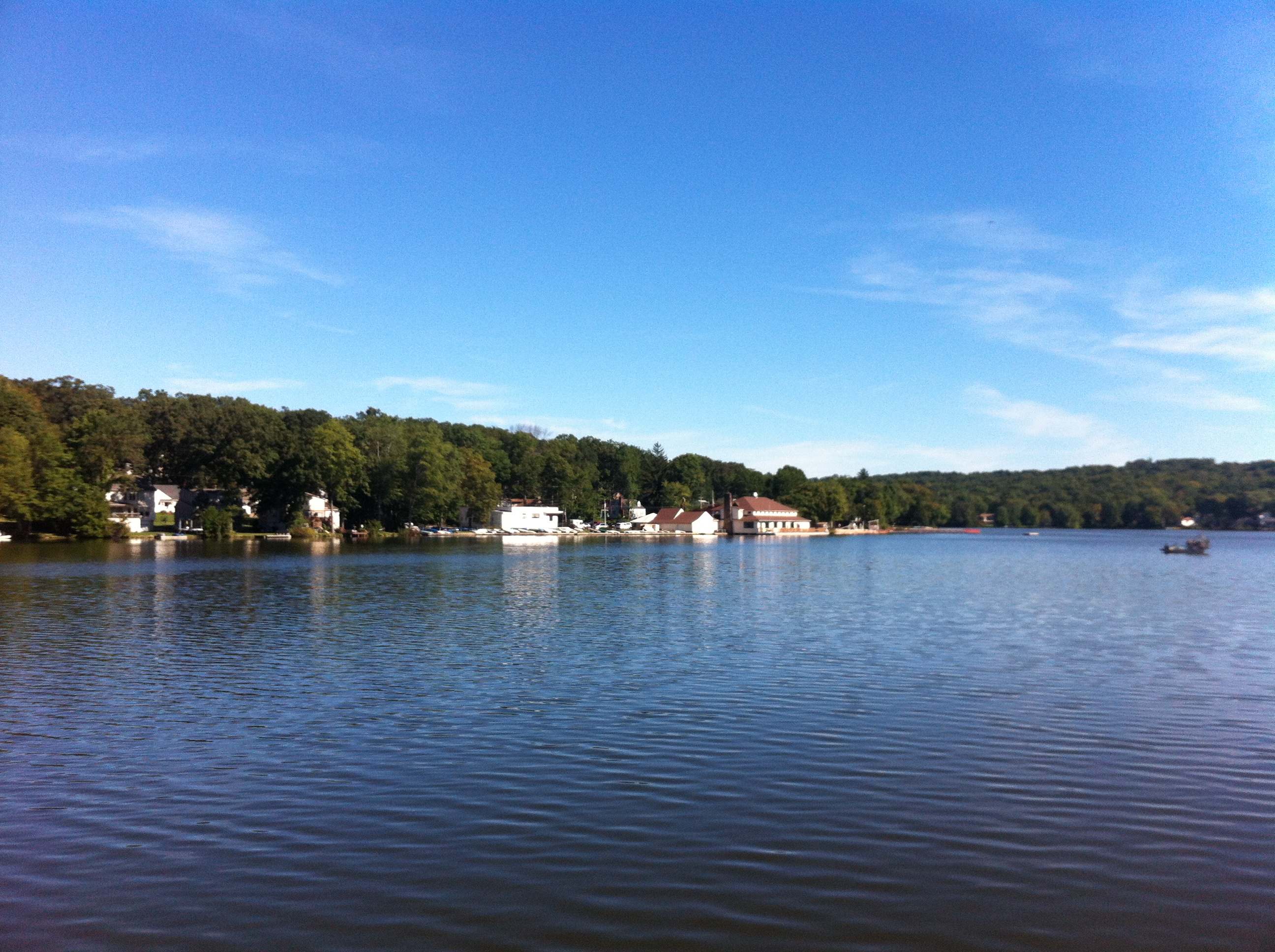
Here at the lake, it’s a crisp, clear day that can’t help but evoke one that began similarly eleven years ago.

Packanack Lake, September 11, 2012

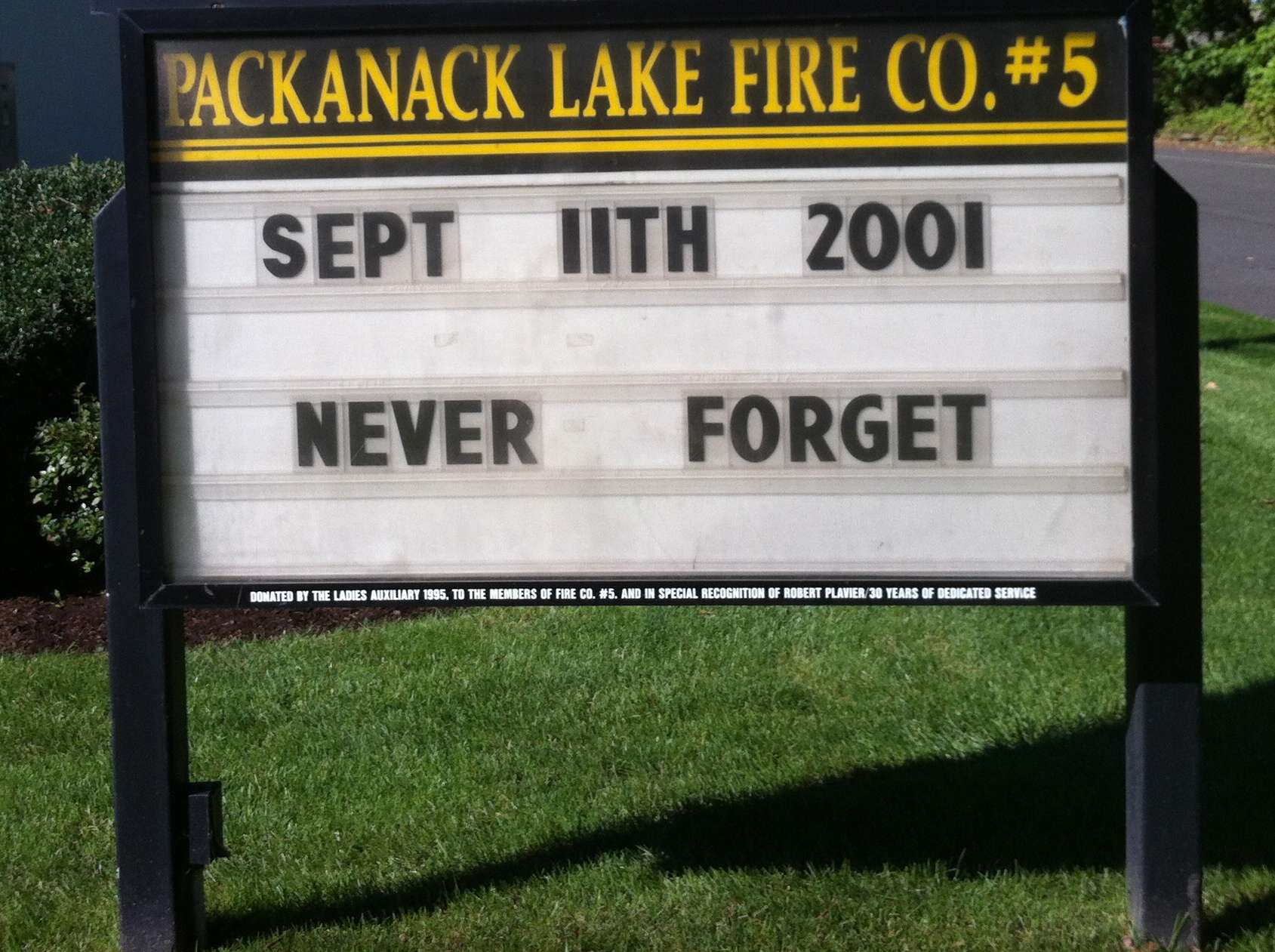
I went for a morning run, feeling grateful that, unlike so many whose lives and dreams and ambitions were cut short that day, I am still here and have the precious opportunity to continue to strive against my limits. Our local volunteer fire department has a commemorative message up. A fraternity of first responders forged in a shared willingness to run toward danger will not soon forget its fallen heroes. Nor should we.

sign at Packanack Lake Fire House, September 11, 2012

Dennis Prager: Lessons from 9/11? What Lessons?

Tuesday, September 13, 2011

At Prager’s site (via @inhuggermugger)

After 9/11, the normal and decent question that normal and decent people — people who fully and happily recognize the existence of vast numbers of normal and decent Muslims in the world — would have posed is this: What has happened in the Arab world and parts of the Muslim world?

But as this, the most obvious question that 9/11 prompted, has not been allowed to be asked, what lessons can possibly be learned?

The answer is, of course, none.

Ten Years Later: 9/11 Links

Sunday, September 11, 2011

I’ve posted my own 9/11 reflections here.

Following are links to some of the most stirring writing I’ve seen today. I’ll continue adding to this list as I go.

Never forget. Never submit.

This YouTube video should make every decent person sick: Counter-demonstrators forced to disperse, while Islamic Supremacists holding signs that call for “Jihad” and declaring “Islam Will Dominate the World” freely spew their rage and burn our flag outside the U.S. embassy in London on 9/11/2011:

James Delingpole commented on this at Ricochet, in: “Western Civilization to barbarians: ‘Please. Come right in. The gates are wide open…’

9/11 is now “National Grandparents Day”! No, really.

Dana Loesch: “My 9/11 Awakening”

Sundries Shack: “9/11, The New Tet”

Ezra Dulis: “9/11: The Hijackers Were Soldiers, The Speech Police Are Terrorists”

@bapartofmylife: “9/11 is a Day of Mourning”

Perfection Under a Red Umbrella: “10 Years Later, Ground Zero & The Pentagon, Hallowed Ground of Flight 93”

GayPatriot: “In Memoriam - James Joe Ferguson Lost Ten Years Ago Today”

All I could remember was how happy Joe always was and how that cheer was infectious to all of his friends and colleagues. I would miss that cheerful influence on me. Joe had made the choice to live life to the fullest extent possible. He was the model of the optimistic American who knows no frontiers and no bounds. He was doing more than his fair share of contributing to a better society.

Mark Steyn: From “Let’s Roll” to “Let’s Roll Over”

And so we commemorate an act of war as a “tragic event,” and we retreat to equivocation, cultural self-loathing, and utterly fraudulent misrepresentation about the events of the day.

Larry O’Connor: “9/11 Was Declaration of War”

Ed Ross: “The Legacy of 9/11 is about much more than terrorism”

Andrew Klavan: “When Hollywood Hit Rock Bottom”

John Nolte at Big Hollywood: “September 11th: My Thanks to Joel Surnow and His Fellow Hollywood Subversives”

James Lileks: The Lake and the Sky

A Plea, Ten Years After: Please, Open Your Eyes

Saturday, September 10, 2011

In past years, I’ve written about where I was on 9/11, posted quotes, written about songs, tweeted the names of victims, and recommended blog posts, articles, and videos. But on nearly every anniversary of the 9/11 al Qaeda attacks since I started blogging, the unifying issue on my mind has been nearly the same: To assess where we are and how we are faring some years after.

Reviewing what I’ve written in years past, I find that my answer to that question has changed very little, and the farther we get from that awful day the more that fact worries me, for despite having successfully thwarted at least 19 subsequent would-be attacks, I don’t think we’re faring very well as a culture, in crucial ways that for me raise serious questions about what our long-term future will hold.

I try not to let the gloom envelop me. In so many ways, I am an optimist in my heart of hearts. I have tremendous confidence in our culture and way of life, in our resilience and adaptability, and in all that we can achieve with our ingenuity and dedication and mutual goodwill. Yet it kills me to see that same culture mired in and hobbled by an unwarranted mentality of self-recrimination and self-doubt, and simultaneously unwilling to candidly examine and confront an ideological movement that is actively, deeply, vocally, immutably, and demonstratedly hostile to its foundational principles and continued existence.

What does it mean to live in a culture that is only just barely willing to stand up and fight for itself in the wake of a horrific act of war such as the 9/11 attacks? I would not have thought our present-day frame of mind possible to sustain after such an event, but the cultural and political divisions that predated 9/11 have proven far more resilient than I would ever have expected. We didn’t wake from our slumber of infighting to pursue, united and with doggedly committed determination, the defense and preservation our nation and way of life; rather, we retrenched and resumed fighting each other, our cultural fault lines painfully underscored in the process. As Michele Catalano wrote three years ago,

In so many ways, 9/11 ended up furthering any divisions we had instead of closing them. We chose up sides and backed away from each other as if we were our own enemies —- as if the enemies we had, those who steered planes into buildings, weren’t enough.

This realization, and the seeming impossibility of bridging the chasm, has been a knife in my heart ever since. It kills me. But I don’t see any way around it.

So many aspects of our cultural condition have caused me grief over the past ten years. I feel crestfallen that it is taking us as long as it has to rebuild at the World Trade Center site. I’ve felt deeply betrayed by a Hollywood that now routinely denigrates and vilifies the country whose values and achievements it once celebrated and defended, a Hollywood that I loved in my youth but have now all but written off and given up on. I have been deeply disappointed in a supposedly mainstream American press that seems to have seen it as its sworn duty to demoralize us and convince us of inevitable defeat and dishonor in the wars we’ve prosecuted, in a way that’s been shown to be transparently contingent on the political party of the President in the White House. I’m troubled that over the past three years, we’ve largely acted in ways that can only serve to embolden our enemies, while giving our friends and allies and those we should at least be lending moral support in their fight for freedom and against totalitarianism (c.f. Iran’s democracy activists, and other participants in the recent “Arab Spring” uprisings) scant reason to hope for the backing of a country that has for so long been thought of as a beacon of hope and the moral “leader of the free world”. It makes my heart sink that too many of our own citizens seem to believe that America is the problem in some form or other.

All of these cultural factors pain me and deeply trouble me, but on this 10th anniversary of the 9/11 attacks I’m willing to largely put them aside in the interest of getting just one, crucial point across regarding the single most dangerous problem we face: the inability or unwillingness to name, frankly discuss, and squarely face our ideological enemy. More than anything else, it is a commitment to reckoning with this circumstance that needs to cross the perhaps otherwise impassable ideological chasm that separates the American Right and Left.

We can and will continue to differ with our countrymen regarding specific policy prescriptions, including matters of war. I could perhaps accept that, in a world where I felt we had all made a candid and fully informed assessment of the adversary we are up against. But there are still many among us who don’t seem to want to look Islamic Supremacism in the face, or even acknowledge its existence, either because the prospect is too frightening, or because the acknowledgment would violate long-practiced “PC” rules of cultural conduct that are so deeply ingrained in us, we fear we wouldn’t know how to function without blindly deferring to them. If I could make one plea to my fellow countrymen, Left, Right, and Center, it would be this: Please, please look with open eyes at what we are up against. Even if you must conclude that Islamic Supremacism is a fringe ideology with no real possibility of gaining dominance or causing substantial long-term harm to the free world (I truly wish I could believe it was so), do so with a full understanding and awareness of what the Jihadists intend for us, far-fetched or not, as detailed in their own words and actions: the return of a 7th century Caliphate that is fundamentally incompatible with and hostile to secular and pluralistic free societies, with all the attendant implications for women, homosexuals, infidels and religious and ethnic minorities. These Jihadists have told us their intentions time and time again, but we somehow refuse to believe them.

We are so conditioned to reflexively genuflect to any and every other culture as a show of goodwill, that both our critical thinking faculties, and our courage to overcome fear of social reprisals and voice our honest concerns, seem to have become disengaged or defunct. If every culture and religion in this world was as benign in its intentions toward us as most are, this willful blindness wouldn’t be a big problem. We could all live together in happy harmony and the “coexistence” that so many understandably wish for. But the fact that most others have relatively benign intentions has disarmed us to the crucial few that do not. Our cultural defenses are down — way down — and even being caught off our guard ten years ago with horrific consequences doesn’t seem to have changed that sufficiently. Informing and educating ourselves about what we’re up against is crucial, for we cannot expect to remain both ignorant and free.

Is this state of denial (or leaning strongly toward diplomatic use of language, if you prefer) causing any real problems? It certainly seems to be. How else could a man like Nidal Malik Hasan remain in active service in the United States Army, after repeatedly making statements against the United States and in sympathy with our Jihadist enemies? There are compelling and deeply troubling indications that not only our armed forces, but our broader defense and law enforcement agencies are compromised in their ability and sworn duty to protect this country and its citizens by pressure to whitewash reality, sanitize the use of language that could be perceived as hurtful or offensive, and shrink from confronting reality. We are letting organizations such as CAIR — a front for the Muslim Brotherhood, whose charter calls for a “grand jihad in eliminating and destroying the Western civilization from within and ‘sabotaging’ their miserable house by their hands and the hands of the believers so that it is eliminated and God’s religion is made victorious over all other religions” — advise our FBI on how to combat violent Islamic radicalism.

Bill Whittle’s April 7, 2010 PJTV piece “The Censorship Agenda” revealed in worrisome detail the sanitizing of our foundational national security documents that has taken place since the original, bipartisan 9/11 Commission Report. (As Bill himself suggests, contrary to the provocative subtitle “Obama Bans ‘Islam’”, the culture of self-censorship and willful blindness that produced these results may very well be indicative of a long-extant problem that predates the Obama administration.)

Think about the implications of Bill’s findings: in stark contrast with the comparatively frank and sober assessment of the 9/11 Commission Report (whose use of key terms is tabulated in the leftmost column, below), the FBI’s 2008 Counterterrorism Analytical Lexicon (next column), our 2009 National Intelligence Strategy report (next column), and the Protecting the Force: Lessons from Fort Hood report on the shooting rampage by Nidal Malik Hasan (rightmost column), use the terms “Islam”, “Muslim”, and “Jihad” a total of zero times.

Zero.

The National Intelligence Strategy report doesn’t even reference “al Qaeda” or use the word “enemy” (employing, instead, the term “violent extremist”, a total of 29 times). The DoD’s Fort Hood report, amazingly, makes no reference whatsoever to “violent extremism”, “Islam”, “Muslim”, “Jihad”, or even to Hasan’s name.

Think about this. Disregard, for the moment, our popular culture and variously informed conversation among Joes like you and me. How is it possible that the very institutions we charge with our defense — whose analyses one would expect, of necessity, to be unflinchingly sober and frank — have become this willfully blind?

I can only shake my head in near-despair at the self-sabotaging ridiculousness of it. It might be funny if the consequences weren’t so dire for all of us. (Bill, however, has a more upbeat outlook than I do this year.)

Forget about applying the non-lethal (but awfully emotionally insensitive) tool of humor by mocking our enemies, which appears to be completely out of the question save for a few valiant out-of-the-mainstream efforts such as Shire Network News and Sands of Passion. In most cases, we can’t even bring ourselves to precisely and candidly refer to them. If our thinking and definitions are clear, there should be no reason not to do so, given all that is at stake.

This man has the right idea (emphasis mine):

There is nothing insulting to decent, good members of the Muslim religion when I say “Islamic extremist terrorist”, any more than it is insulting to the Italian-American community (when I was a prosecutor) to say the word “Mafia”. Or that it would be insulting to decent Germans to say the word “Nazi”.

One mistake to avoid is political correctness. You can’t fight crime, and you can’t deter terrorism, if you are hobbled by political correctness. I believe that Major [Nidal] Hasan is an example of that. There is no way that Major Hasan should have been a major in the United States Army, after several years of spewing forth hatred for the United States of America… I would consider Major Hasan’s attack on Fort Hood an Islamic extremist terrorist attack. I have a hard time understanding why the government doesn’t see it that way, since he was yelling “Allahu Akbar” when he started killing people. …

… We cannot use this as an opportunity to say, “let’s put this behind us”, because if we we do that, we will repeat the mistake that we made before September 11th, which is not evaluating correctly the scope and the danger of Islamic extremist terrorism. Notice I use those words and I use them often. I do because I have a simple belief: If you can’t face your enemy, you can’t defeat your enemy. If you can’t honestly describe your enemy, there are distortions in your policy decisions as a result of that.

Re-read that last part, and internalize the essential lesson: If we refuse the accurate use of words, we are sabotaging ourselves.

Since accusations of “Islamophobia”, etc. are now flung automatically against any who express concern about Islam’s militant political arm as exemplified by the likes of al Qaeda and Hamas, let me be as clear as it’s possible to be, knowing full well that “it is impossible to speak in such a way that one cannot be misunderstood” (or willfully misinterpreted): I really don’t want to spend my time writing and thinking about this stuff. I have no intrinsic need to gratify myself or feel superior by grinding ideological axes against either an external enemy culture or my own countrymen. I’d much rather invest my time and energy inventing, innovating, creating, raising my son, spending time with my wife, living and working and striving to do better among peers whose origins span the globe, but who share a necessary basic dedication to the essential principles of a free society. I would love nothing more than to be decisively proven wrong about all of this, and get back to my life. I think and write about this kind of stuff because, as far as I can tell, there is no avoiding it. The very culture that furnishes and protects my ability and yours to live our lives as we do and freely engage in such humanity-advancing work, is under attack by another that demands our submission to a suffocating, stifling, totalitarian ideology. If we cannot name, discuss, and confront that ideology, we might as well surrender to it.

My “endgame” — the long-term future I hope for — is not a perpetual state of war (who would wish for that?), but a true coexistence of stable peace and security that can only exist after the Islamic Supremacist threat has been acknowledged and somehow neutralized. That is to say, I seek a peace worth having. To whatever extent we can accomplish that without resorting to the use of force and violence, wonderful — you have me on your side. I want and hope for a future where I can freely live, work, and prosper alongside all others who share my commitment to upholding the essential principles of our free society, Muslim and non-Muslim alike, regardless of where on the globe they hail from, without any of us having to fear violence from totalitarian nutjobs. There is too much to do and achieve for us to waste our time, capabilities, and resources on war where we have a reasonable alternative. But to shrink from the last-resort necessity of war when it is upon us seems to me no less a betrayal of the society we rightly cherish, for if left undefended that society will crumble.

I speak “peace”, when peace is spoken.

Even when we are not in our worst moments of genuflecting self-censorship, our choice of terminology has been clumsy, muddled, and unhelpful from the start — and, make no mistake, these poor choices of terminology sink us. Case in point: A “War on Terror” is no more meaningful than a “War on Blitzkrieg”, or a “War on Kamikaze strikes. Terror is a tactic, not an identification of the ideology that motivates its perpetrators. The ideology we’re up against is is most accurately described as “Islamic Supremacism” — a militant, political branch of Islam that sees as its imperative the subjugation under strict Islamic law (Sharia) of all non-Muslims and any who wish to live in free and pluralistic societies. To attempt to broaden our response to al Qaeda’s brand of violent Islamic Supremacism into a “War on Terror” is to dilute our sense of purpose, and pretend against evidence that there are just as many terrorists motivated by various other ideologies who pose an imminent threat. This awkwardly vague and clumsy choice of words was, I think, both an attempt to avoid any reference to or indictment of any sect of “Islam”, and a well-intentioned overture of comradeship to other nations who had suffered terrorist scourges of other origins, but in the end I believe it’s been an ill-advised one. Since we’re not supposed to draw any connection between acts of terrorism and even a small, extreme, ostensibly non-representative minority fringe of Islam, we try to make do with the unhelpfully vague “War on Terror”, and it’s a wonder if we don’t forget what, in fact, we are fighting against.

I’m out of words, but I hope I’ve made my point clearly.

Please, my friends. Before you decide this is not your fight, read, research, learn. Our shared future is at stake.


Recommended Watching

I’ve watched this memorial slideshow every year. It unfailingly moves me to tears. Never forget that day, nor misremember. Never forget those we lost, the heroes who ran unbidden toward danger and lost their lives saving others, the heroes aboard Flight 93 who lost theirs preventing another attack that would likely have killed scores more of their fellow citizens…

Inside 9/11: an in-depth accounting of the 9/11 attacks and the events that led up to them

102 Minutes that Changed America: a uniquely composed account of the attack on New York, seen through raw footage from a variety of sources, combined with emergency calls and radio communications

Recommended Reading

Of all the deeply moving posts, pages, and articles I’ve seen about 9/11, this one from 2009, comprised of stirring photos and an unflinching examination of the enemy and cultural crisis we face, is unforgettable and not to be missed: 9/11: Never Forget, Never Give In

I’ll also be posting links, separately over the next few days, to the best writing about 9/11 I encounter this year. Look for posts tagged “9/11”.

My Previous Years’ Posts

2009: Tomorrow is 9/11 ~ My Experience of September 11, 2001 ~ 9/11 Quotes

2008: 9/11, Seven Years On ~ 9/11, Seven Years On, Part 2 ~ 102 Minutes that Changed America

2007: 9/11, Six Years On

2006: Soon, Time Again to Reflect ~ 9/11 Observances ~ 9/11 Observances, Part 2

2005: I Remember

2004: Remembering and Rebuilding (Yes, that’s me, in a post at my old blog. I’ll be transitioning to blogging openly under my own name here shortly. It’s about time.)

At Long Last!

Monday, May 2, 2011

New York Firefighters, Times Square, May 1st, 2011

9/11: Two Songs

Friday, September 10, 2010

I have loved and enjoyed music all my life, but have never before or since experienced anything like the two weeks or so after 9/11, when, for the first time, I found it impossible to listen to any music at all. Music I had treasured all my life, with which I had felt a deep emotional connection, and in which I had sought refuge through many crises, fell flat on my ears, and seemed a distant artifact of another life that I could never return to.

I don’t remember any particular moment when I was first able to break out of that isolated silence. I think it was a gradual and tentative process. Thankfully, the human mind has a remarkable ability to adapt and recover, to put tragedy and horror behind and get on with the necessities of day-to-day life in the present. Eventually my ability to enjoy music somehow found a way to coexist with the gloom in the back of my mind, with daily thoughts of that terrible day and its consequences, of the fight we’re now in and how ill-equipped we seem to be as a culture to prevail.

It took years for our creative culture to begin to make sense of 9/11 and its world-changing aftermath, and for songwriters to grapple successfully with this extraordinarily difficult subject. The two superb songs that are especially on my mind this year are relatively recent.

Tuesday

John Ondrasik, who records and tours under the the band name “Five for Fighting”, wrote a remarkably stirring song about 9/11 and its psychological aftermath called “Tuesday”. Released on the 2009 album “Slice” (Amazon, iTunes), and given a fitting intro by John on his “Live in Boston” album (iTunes, “Tuesday” reflects on the ordinary day that became anything but, on the helpless sense of loss, of uncertainty whether further attacks would come, and our inexorable tendency to gradually forget, as even the most awful of memories slowly recede into our increasingly foggy recollections of the past.

John spoke briefly about “Tuesday” in this Big Hollywood interview, and was kind enough to confirm the lyrics for this post. I can’t do this deeply moving song justice in prose. — Go and have a listen…

Tuesday

One year like any old other year
in a week like any week
Monday lying down,
half asleep
People doing what people do,
loving, working and getting through
No portraits on the walls
of Seventh Avenue

Then Tuesday came and went
like a helicopter overhead
The letter that she left,
cold addressed in red
Tuesday came and went
one, one September when
Will she come again?

The thing about memories
they’re sure and bound to fade
Except for the stolen souls
left upon her blade
Is Monday coming back?
Well, that’s what Mondays do
They turn and turn around
afraid to see it through

Tuesday came and went
like a helicopter overhead
The letter that she left
cold addressed in red
Tuesday came and went
one, one September when
Will she come again?

Tuesday came and went
one, one September when
Cold and dressed in red, how could I forget? Tuesday came and went
like a helicopter overhead
Will she come again?

Remember (9-12)

I found Jeremy Hoop’s “Remember (9-12)” just a couple of weeks ago, and it has replayed in my head ever since. More directly than any other song I’ve heard about 9/11, it addresses the West’s willful blindness and perilously persistent state of denial regarding what we’re up against.

“Peace, prosperity, pride. Our wizards said there’d be no ebb to this tide,” the song begins, conjuring the Fukuyama-esque belief that seemed to prevail through the 1990s — the belief that we had reached an “end of history”, that the future from there on held not the familiar historic cycles of conflict and the periodic return of tragedy, but an unprecedented deviation from all human history to date, in which liberty’s light would expand inexorably to illuminate the world and raise up all of humanity. To be sure, we had willfully shut our eyes to the threat of Jihadist warfare that had clearly announced its intentions (c.f. Osama Bin Laden’s 1988 declaration of holy war against the United States, and the subsequent bombings of the USS Cole, US embassies, and, in 1993, the World Trade Center). Together with their nearly 3,000 victims, the 9/11 Jihadist attacks on the United States irrevocably killed this naïve delusion that we had somehow escaped history’s grasp.

“And the sages did not see the spaces to hide, or the cracks in the footings, termites inside…” A dual reference, perhaps — to the 19 al Qaeda “termites” who had concealed themselves in plain sight among us, training for their horrible task in our flight schools, and living in our neighborhoods — and also to the damage of our own doing that had crept into our culture’s foundations, leaving us vulnerable to such an attack and only weakly able to respond to it. The lyric instantly brought to mind the opening of Bill Whittle’s superb 2005 essay “Sanctuary”, which I’ve quoted before:

What’s worse than crawling under your beloved house and seeing the foundation’s rotten with decades of termite damage?

NOT crawling under your beloved house and seeing the foundation’s rotten with decades of termite damage.

(Sadly “Sanctuary” is no longer online, but it can be found in print as part of Bill’s “Silent America” essay collection. I’ll keep an eye out for its return, and update the link in my Bill Whittle essay index when it surfaces.)

Jeremy goes on with uncommon songwriting grace, recalling our brief unity (or perception thereof?) in the wake of the 9/11 attacks, our determination to remember that day and understand its implications, and our subsequent withdrawal into an even more willful blindness, an insistence on doing the impossible, on retreating to the “9/10” mindset that had allowed the attacks to happen. “Just seven short years, oops! we’ve blown it again. The bubbles this time around are bigger times ten” We stand on the precipice overlooking an abyss, it seems — one that threatens to swallow us as surely as other civilizations before that have abandoned their own defense. If 9/11 wasn’t enough to wake us up, to snap us out of our willful denial, what will it take? Is there any hope that we, as a civilization, will avoid passively free-falling to our demise? Some of us still struggle to sound the alarm loudly and clearly enough so that our countrymen will hear and take heed, but it often seems a futile endeavor … as if no one is listening.

Can we put them back, pull the slack, right the track
But it’s business as usual, we’re playing the fool
Though no bodies falling to the ground, no smell of jet fuel
The carnage lying round the bend’s as real and as cruel

Much like the equally absurd notion of airliners full of passengers and fuel being turned into weapons and flown into buildings full of people, the idea of a devastating biological attack, or of a radioactive crater where a major city once stood, will continue to be nothing but a figment of far-fetched, scare-mongering fiction. Until it isn’t.

Many realms gone before have marched to their December
While the crowds cried “all is well!”
That fate will be ours if we don’t remember
Those days after, days after
The towers fell
… Remember, Remember, Remember…

Jeremy Hoop can be found on Twitter as @jeremyhoop.

Remember (9-12)

Peace, prosperity, pride
Our wizards said there’d be no ebb to this tide
And the sages did not see the spaces to hide
Or the cracks in the footings, the termites inside

Then darkness broke through that clear morn in September
When our land saw the blackest hell
I swore what I’d be, and I would remember
Those days after…

When what to my wondering worry worn eyes
Mere strangers at once turn near kindred with binding ties
City to city to wide open country skies
No left or right, black or white, hands on hearts, all please arise!

The light that shone through those dark days like an ember
Lit the fires of the citadel
And we swore what we’d be, we would remember
Those days after the towers fell

Short memories, of braveries, of slaveries,
Prone to retreat
And walk through the door, like Rome before, forevermore
Known in defeat
The remedy, no mystery: know history
Or be doomed to repeat it.

Just seven short years, oops! we’ve blown it again
The bubbles this time around are bigger times ten
The Animal spirits broke loose from the pen
Can we put them back, pull the slack, right the track
But it’s business as usual, we’re playing the fool
Though no bodies falling to the ground, no smell of jet fuel
The carnage lying round the bend’s as real and as cruel

Many realms gone before have marched to their December
While the crowds cried “all is well!”
That fate will be ours if we don’t remember
Those days after, days after
The towers fell

Remember the days after
Remember the day after
Remember, Remember, Remember

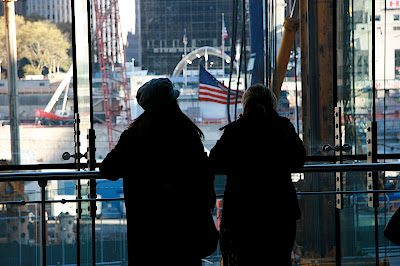
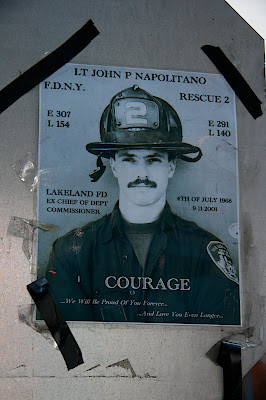
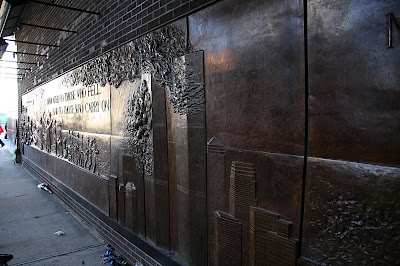
November 2007 World Trade Center Pictures

Sunday, September 21, 2008

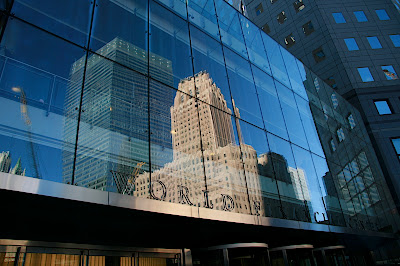
Having finally gotten around to setting up a Picassa account to go with this blog, I’ve posted my pictures from this visit to the World Trade Center site on November 23, 2007. They’re a bit dated now, but hopefully still of interest.

A few selections below. Click here for the album.

9/11, Seven Years On, Part 2

Friday, September 12, 2008

I’m going to hold off a bit longer on posting my own 9/11 recollections, as otherwise promised yesterday. I’m not quite satisfied with what I’ve got yet, and it’s important to me to get this right.

Meanwhile, some highlights of the best stuff I encountered during this year’s trip through the news sites and blogosphere:

Via PowerLine, Debra Burlingame, sister of the pilot of American Flight 77 that was crashed into the Pentagon on 9/11, warns us not to “misremember”

There is a disturbing phenomenon creeping into the public debate about all things 9/11. Increasingly, Sept. 11 is compared to hurricanes, bridge collapses and other mechanical disasters or criminal acts that result in loss of life, with “body count” being the primary factor that keeps it in the top spot of “worst in the nation’s history.”

Misremembering is as dangerous as forgetting. If we must know one thing, it is that the Sept. 11 attacks were neither a natural disaster, nor the unfortunate result of human error. 9/11 wasn’t the catastrophic equivalent of a 3,000-car pileup.

The attacks were not a random act of violence or insanity. They were a deliberate and brutal act of war committed by religious fanatics engaged in Islamic jihad against the United States, all non-Muslim people and any Muslim who wishes to live in a secular society. Worse, the people who perpetrated the attacks have explicitly told us that they are not done.

Read the whole thing.

Robert Spencer at Jihad Watch:

[T]here has still never been a full and comprehensive discussion of the jihad threat in the American public square.

So seven years after the Towers went down and the Pentagon was wounded, the jihadists have every reason to smell victory — not in Iraq, where they are indeed on the run, but in their efforts to cow and intimidate the West into giving up all resistance to Islamization. It’s happening, but no one notices or cares, because it is happening in small steps.

More here: “Islamic terrorism is a myth”

Gateway Pundit asks: Why the relative silence from al-Qaeda on this seventh anniversary of 9/11?

New York-based Pamela Geller at Atlas Shrugs has pictures of this year’s 9/11 observances (and no small amount of accompanying lunacy) at Ground Zero.

(Update 9/14: Pam has video from her Ground Zero visit too: 911 “Truthers”, Bagpipes, and Great Americans)

Lahawk has a roundup of Ground Zero rebuilding news.

Neo-neocon re-posted an apropos piece from 2006, that touches, among other matters, on the foresight we wish we’d had in anticipating and guarding against the attacks:

But the clearest foreshadowing of the event that would henceforth be known only by those numbers, “9/11″—as though words were somehow inadequate to describe it—was its most direct predecessor, the 1993 World Trade Center bombing. That earlier attack distinguished itself in audaciousness by being the only large-scale Islamist totalitarian terrorist attack within the boundaries of the United States prior to 9/11.

And it was every bit as serious in intent. The only reason it wasn’t taken as seriously as it should have been was the seemingly Keystone Cops-like incompetence of its perpetrators. They would learn from their errors, and quickly. It would take us longer to learn what we needed to know.

Rick Moran: 9/11 Still Affects Our Political Life:

If there is one thing we should have learned since 9/11 its that absolutism is deadly. Its stultifying effects on debate precludes any kind of rational response to the serious threat of Islamic terrorism.

…

It is not the trivial things that separate us. It is nothing less than losing trust in the intentions and motivations of the other side. And 9/11 took a nation already split along cultural and ideological lines and added fear to the mix. Now each side sees the other not just as wrongheaded but truly evil, and opposing them becomes a matter of saving the country.

Michele Catalano:

In that small space between three hijacked planes and color-coded terror alerts, between a small field in Pennsylvania and conspiracy theories, there was a brief, lit-up moment when we felt like one. I remember thinking that this tragedy would fix us instead of break us. I want so much to feel again that hope and unity that existed in the days after the attack. There was proof, ever so briefly, that we could come together as a nation to help and comfort each other, when we were all just human beings on common ground instead of left or right, Democrat or Republican.

Never forget, indeed. Never forget that out of the rubble of tragedy arose a moment when we put everything aside to be one whole nation. It is so easy at a time like now to forget that, to draw lines in the sand and become us and them. In so many ways, 9/11 ended up furthering any divisions we had instead of closing them. We chose up sides and backed away from each other as if we were our own enemies — as if the enemies we had, those who steered planes into buildings, weren’t enough.

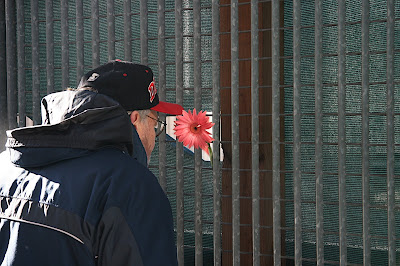
Flowers at Ground Zero
November 23, 2007

9/11, Seven Years On

Wednesday, September 10, 2008

I had hoped to take the day off work tomorrow, so as to spend it online exploring (and perhaps, through a bit of my own writing, participating in) the distributed “memorial service of sorts” that has given me both solace and food for thought in previous years. Unfortunately there is too much that needs doing this week, so I will have to catch up with my blog-reading and link- and comment-posting later.

I am right now putting what I hope will be the final finishing touches on a retelling of my own [largely peripheral, but deeply transformative] experience of September 11th, 2001 and bits of the period that immediately followed — a project that I’ve been meaning to get to for a long while. If I still like what I’ve written well enough in the morning, I’ll post it. It’s far from the entire story I want to tell, but it’s a start.

My posts from previous years are still pretty reflective of my current thinking:

This 9/11 memorial video (backup site here) still puts a lump in my throat and moves me to tears. Never forget that day.

Remember the Falling Man, and the many others like him who were forced to make the same terrible choice.

UPDATE 9/12: I’ve posted more here.

Beyond the Fringe of Tastefulness and Sanity lies...

Saturday, April 12, 2008

At Instapundit:

“A PROVOCATIVE MASKED BALL SET IN THE RUINS OF THE WORLD TRADE CENTER:” They do this because they know we won’t behead them. Such is the bravery of artists.

I declare the Marshall Plan a failure. Bring our troops home from Europe now!

Buckets o' Interesting Stuff

Friday, March 14, 2008

I’ve found myself reading and bookmarking a number of noteworthy articles this past week. Lots of interesting stuff to comment on here, but for fear I might not find the time to do so at any length very soon, I’m going to catch up by posting some quick quotes and links…

First up: Writer/director/producer David Mamet wrote an exceptional article in the Village Voice, in which he explains his shift away from the left. Interestingly, he attributes his own change in thinking to an inability to reconcile long-held beliefs with the more favorable evidence offered by his everyday experiences.

I’d observed that lust, greed, envy, sloth, and their pals are giving the world a good run for its money, but that nonetheless, people in general seem to get from day to day; and that we in the United States get from day to day under rather wonderful and privileged circumstances — that we are not and never have been the villains that some of the world and some of our citizens make us out to be, but that we are a confection of normal (greedy, lustful, duplicitous, corrupt, inspired — in short, human) individuals living under a spectacularly effective compact called the Constitution, and lucky to get it.

…

And I began to question my hatred for “the Corporations” — the hatred of which, I found, was but the flip side of my hunger for those goods and services they provide and without which we could not live.

And I began to question my distrust of the “Bad, Bad Military” of my youth, which, I saw, was then and is now made up of those men and women who actually risk their lives to protect the rest of us from a very hostile world. Is the military always right? No. Neither is government, nor are the corporations — they are just different signposts for the particular amalgamation of our country into separate working groups, if you will. Are these groups infallible, free from the possibility of mismanagement, corruption, or crime? No, and neither are you or I. So, taking the tragic view, the question was not “Is everything perfect?” but “How could it be better, at what cost, and according to whose definition?” Put into which form, things appeared to me to be unfolding pretty well.

It sounds to me like he’s simply become more pragmatic. Brings to mind neo-neocon’s excellent and insighful “A Mind is a Difficult Thing to Change” series.

Elsewhere in the article, Mamet included a mention of NPR that I found amusing and relevant, as my own wife is an NPR fan of many years but I’ve come to find the station’s reporting biases frustrating. Mamet begins:

We were riding along and listening to NPR.

(Typical scene for me and my wife too, during our morning commute.)

I felt my facial muscles tightening, and the words beginning to form in my mind: Shut the fuck up. “?” she prompted. And her terse, elegant summation, as always, awakened me to a deeper truth: I had been listening to NPR and reading various organs of national opinion for years, wonder and rage contending for pride of place. Further: I found I had been — rather charmingly, I thought — referring to myself for years as “a brain-dead liberal,” and to NPR as “National Palestinian Radio.”

Funny, I’ve come to refer to it in my own mind with a chuckle as “Nationalized People’s Radio” … Mamet and I must be thinking on similar wavelengths…

(Update 3/19: “National Progressive Radio” is another variant I’ve since caught myself using)

In other news: George McGovern seems to get it more than either of our current Democratic presidential candidates when it comes to economic freedom, as Glenn Reynolds noted at Instapundit. Why, as Glenn rightly asked, isn’t he running for president?

The nature of freedom of choice is that some people will misuse their responsibility and hurt themselves in the process. We should do our best to educate them, but without diminishing choice for everyone else.

The last remaining staircase at the World Trade Center site was moved on Monday. Fittingly, it sounds like it’s going to be preserved as part of the World Trade Center 9/11 memorial.

Charlie Martin puts his finger on something that’s been troubling me about the healthcare debate for a long while: What many people think of as health “insurance” isn’t actually insurance.

IraqPundit genuinely wonders what Obama thinks about U.S. involvement in Iraq, and provides an instructive recap of Obama’s position statements over time. Therein lay some interesting surprises for me, including this quote from a Boston Globe report:

In July of 2004, the day after his speech at the Democratic convention catapulted him into the national spotlight, Barack Obama told a group of reporters in Boston that the United States had an ‘absolute obligation’ to remain in Iraq long enough to make it a success.

‘The failure of the Iraqi state would be a disaster,’ he said at a lunch sponsored by the Christian Science Monitor, according to an audiotape of the session. ‘It would dishonor the 900-plus men and women who have already died… . It would be a betrayal of the promise that we made to the Iraqi people, and it would be hugely destabilizing from a national security perspective.’

He might actually have had a chance at my vote, had he continued with this kind of talk. But lately he seems disinterested in talking about anything but his 2002 advocacy against the Iraq invasion, and in discussing any Iraq policy or strategy short of an immediate withdrawal — an act of retreat and defeat that our enemies would not soon forget, and that would surely come back to haunt us in future conflicts.

Also, at Hot Air: Does the media’s anti-war rhetoric embolden Iraqi insurgents? (Thanks again Instapundit.)

At the Wall Street Journal: What is it about Democrats and Chávez?

And at phi beta cons: Is “postmodern belief in the futility of life” helping drive some to become campus killers? (Hat tip: Instapundit)

Visiting Hallowed Ground

Friday, November 23, 2007

I'm iPhone-blogging from the World Trade Center site, a lump in my throat as I write this. This is the first time I've been back here since two weeks after the 9/11 attacks, when large debris was still being cleared and one couldn't get closer than a couple of blocks. Blogger doesn't yet appear to support image posting from the iPhone, so I'll have to wait until I her home to add pictures (of which I've taken many).

Overall feeling of deep sadness coupled with searching for that glimmer of hope that we will finally rebuild. I just wish it wasn't taking so long...

Update 9/21/2008: I've finally posted my pictures from this day. Click here to view the album.

9/11 Observances, Part 2

Wednesday, September 13, 2006

Some further thoughts that I drafted a couple of days ago and have been mulling over a bit more.

In large part, what's been on my mind lately is assessing where we are and how we're faring, five years after the 9/11 attacks, and where we need to be going from here. Although overall I have tended to be an optimist, I must say my general feeling on the topic at this point in time is not especially optimistic.

On the upside, there is little question in my mind that, if we in the West possess the necessary resolve, we are every bit capable of defeating al Qaeda and similarly-minded jihadist groups. As Christopher Hitchens said on the Hugh Hewitt Show last June 27th:

In the long run, I'm perfectly certain of victory over these people. And I think in some ways it's impossible for them to win. They're too backward, they're too stupid. Their ideology is self-destructive as well as destructive. It's literally suicidal.

Mind you, I do think it's vitally important that we take very seriously the implications of the harm that jihadists clearly intend to do us should they again acquire the necessary means, and that we actively work to dismantle terror organizations and thwart their plans. As I've said before, however, I've come to be still more worried about our own state of mind than about any form of physical violence that al Qaeda and its brethren have in store for us. I sincerely hope I'm wrong about the significance of this, but it leaves me with a sinking feeling that I just can't seem to shake.

Among other things I keep asking myself: Why oh why, five years later, haven't we rebuilt at Ground Zero yet? In my previous post, I quoted James Lileks' recent comments on the matter:

If 9/11 had really changed us, there’d be a 150-story building on the site of the World Trade Center today. It would have a classical memorial in the plaza with allegorical figures representing Sorrow and Resolve, and a fountain watched over by stern stone eagles. Instead there’s a pit, and arguments over the usual muted dolorous abstraction approved by the National Association of Grief Counselors. The Empire State Building took 18 months to build. During the Depression. We could do that again, but we don’t. And we don’t seem interested in asking why.

I think architect Sherri Tracinski had it right in her July 2002 op-ed: rebuilding is an imperative for the health and survivial of our civilization.

During the war of 1812, when the British burned the Presidential Mansion, what did we do? We rebuilt the mansion, repainted the charred exterior, and called it the White House.

In the 1850s, when a fire burned the Capitol building, plans were made to rebuild it, but soon the country was split apart by the Civil War. Yet it was during the war, with limited funds and limited workers, that the Capitol was rebuilt and enlarged using the latest modern materials. During a conflict that threatened to rip the nation in two, the rebuilding of the Capitol demonstrated Lincoln's confidence that we would succeed in preserving the Union.

Today, however, America's reaction is increasingly one of passivity and resignation. We flounder in a half-hearted war because we're afraid we might suffer casualties—or worse, we're afraid we might inflict them on the enemy. We plead with our allies and our enemies for permission to invade Iraq. And when the World Trade Center site is cleared, we propose a half-hearted building campaign. We accept a slow suicide.

I want very much to see us rebuild where the Twin Towers once stood, as a symbolic affirmation of our confidence in ourselves and our will to go on. There's a plan in the works and a timeline. But in the five years since the 9/11 attacks, I've begun to wonder how serious we are about it and whether it's really going to happen.

Dragging our feet on rebuilding where the towers stood is one thing. What troubles me more deeply still is the accidental alliance of worldviews that seems to have occurred, between the Islamic fundamentalists who condemn and seek to eradicate the lifestyles of Western “infidels”, and those among the domestic left who criticize and abhor our way of life no less harshly, while unhesitatingly aligning themselves with whomever happens to be speaking out against the United States this week or the next, from theocrats such as Ahmadinejad to deeply antiliberal Latin-American thugs such as Hugo Chavez and Fidel Castro. The choice of foreign figures with whom America's domestic and foreign critics ally themselves is in fact often quite revealing.

It is repeatedly alleged that our purported objective of spreading democracy and liberty is mere pretext for more nefarious goals. Yet at times it seems to me that the greatest fear of all for some is that fostering liberal democracy just might be our actual goal, and that, worse yet, we might actually succeed at it. To be sure, American-style liberal capitalist democracy is a competitor for mindshare in the world's marketplace of governing ideas. And to some, its continued spread is just about the worst possible thing that can happen, and they seem genuinely and perhaps unsurprisingly eager to see us fail in this endeavor. The overlap between those who wish to see the United States back down and those to whom the popularization of characteristically American values and ideas about governance is abhorrent is substantial, and readily visible at any of the major anti-war protest rallys that have been held in recent years. This exhibition, which is running contemporaneously with the fifth anniversary of 9/11, the day we were deeply wounded in a way that no one has ever wounded us before, is likewise typical of the monolithic attitude and synergy of these ideas one sees in the contemporary art world. Its heroically dissenting participants are going out on a limb to express their resistance to both war and the “globalization of consumerist capitalism.” No mention of Saddam's torture chambers or mass graves to be found in such venues, nor of the liberation of women from Taliban-enforced Sharia in Afghanistan. Just gloom and self-loathing and all the necessary ingredients of suicide for the West.

At the same time that such apparent synergies of thought and their potential consequences give me a chill, I worry also about our own credulity. Whether through careful study or by accident (and I'm finding myself increasingly inclined to believe the former) jihadists and their allies seem to be playing the American left's sympathies with great virtuosity. They appear to have learned precisely the right language to use, so deftly exercising (as Ahmadinejad has in recent statements) key hot-button terms like “imperialism”, “oppression”, “hegemony”, and so forth in their rhetoric, in evidently rather successful attempts to build sympathy and justifications for their actions, that you'd almost think they had honed such skills in American universities.

It positively baffles me that people who exercise so much skepticism in dissecting and criticizing the (certainly far from perfect) actions of our own leadership seem to apply so little of that skepticism to the statements and intentions of those who openly, vocally, and clearly seek our destruction. Americans and others who credit our government with all manner of capacity for deception, vicious motives, and malfeasance, seem stunningly credulous when it comes to the rhetoric of the jihadists and their international sympathizers, and eager to believe their assertions that it's all our fault. I think there's some truth to the notion that this kind of conclusion is actually appealing and comforting to some people in a rather counterintuitive way: because if it's all our fault, instead of the being result of circumstances, actors, and ideologies beyond our control, then in theory we can make it stop. Maybe sometimes it is just less frightening to blame the parent than to confront a world of potentially grave danger and uncertainty. Unfortunately, a consequence of this kind of thinking is that in the place of assertive action, its adherents are demanding the kind of denial, appeasement, and perpetually apologetic multiculturalist pandering that, while arguably harmless enough pre-9/11, I fear can now be the end of us if we allow it to be.

So where does that all leave us? In a significant amount of danger and with a lot of serious assessment and repair work to do, I'm afraid. But it's work we absolutely need to do, I believe, because our future depends on the outcome.

As Bill Whittle phrased it in in the introduction to his 2005 essay “Sanctuary”:*

What’s worse than crawling under your beloved house and seeing the foundation's rotten with decades of termite damage?

NOT crawling under your beloved house and seeing the foundation's rotten with decades of termite damage.

Having suicidal theocratic zealots for enemies is one challenge. But if this civilization of ours is to survive, I think we need most of all to begin seriously examining some of our own seemingly suicidal tendencies and getting our house in order. We need to fully confront, understand, and treat this cancerous, deeply misguided self-loathing before it's too late.

Later in “Sanctuary”, Bill wrote:

I used to wonder why civilizations fell. No longer. I see it now before my eyes, every day. Civilizations do not fall because the Barbarians storm the walls. The forces of civilization are far too powerful, and those of barbarism far too weak, for that to happen.

Civilizations fall because the people inside the Sanctuary throw open the gates.

The most crucial battle to be fought, in the fight for this magnificent, life-affirming, fragile civilization of ours, is the battle to win hearts and minds — beginning, most importantly of all, with our own. If we fail in that endeavor, all may well be lost. But if we can find it within us to succeed, then I believe no enemy from without, however vicious and determined, can long endanger this outpost of sanity and decency that so many of us are so fortunate to call home.


* UPDATE 2009-09-08: Sadly, “Sanctuary” appears to have been a casualty of Bill's move to pajamasmedia.com. I've updated the above links to point to where the essay should be -- and, I hold out hope, will be someday -- but for now the text of it is missing in action, and can only be found in the print edition of Bill's excellent “Silent America” essay collection (which I can't possibly recommend highly enough).