Thanks for visiting! This site has moved to fearlessdream.us, where all new posts will appear! Please update your bookmarks accordigly.

The new feed URL is: http://fearlessdream.us/feed/

“The secret of happiness is freedom. The secret of freedom is courage.”
— Thucydides

“A civilization that feels guilty for everything it is and does will lack the energy and conviction to defend itself.”
— Jean-François Revel

On to New Pastures

Friday, September 5, 2014

After a fruitful nine-year journey here at blogspot.com, the time has come for me to move this project to greener pastures. I've copied all of my posts to the new site at fearlessdream.us, and will be publishing all future material there.

Blogger helped me get my start, and for that I'm grateful. But I'm interested in greater ownership of my content, hope of simpler, more streamlined page structure and markup (I confess, I geek out a bit on stuff like that), and the other benefits that moving to WordPress can offer.

I haven't gone to the length of updating links or setting up forwarding for individual posts. But the RSS/Atom feed should auto-forward to the new feed URL (http://fearlessdream.us/feed).

This project is far from over, so please stop by the new site for the latest, including new episodes of The No Fear Pioneer. You can also still find me on Twitter as @kulak76.

Thanks for reading, and here's to the future! Ad astra!

Resuming Blogging; My Oldest's Journey Through School Begins

Thursday, January 2, 2014

It’s time to start writing and publishing here again. Straining to get a business off the ground while raising two young boys, it’s been hard to find the time, but there are challenges ahead that I’m going to need to work out how to deal with, and working through my thoughts in writing seems more likely than anything else to help. I also feel the need to do something useful to help turn this culture of ours around — or, if that isn’t possible, at least help others to navigate a way out — so it’s time to make time.

With my older son on the verge of turning five, kindergarten and all that follows it are suddenly looming near — a prospect that brings me no small amount of dread and apprehension.

In part, I’m concerned because of my own difficulties with public school education — difficulties that, in summary, cultivated in me such a strong dislike for formal education that I waited four years before going to college and repairing that relationship. (Thankfully, college is not high school by any stretch. Having found a passion for physics through self-motivated study on my own, I devoted my very best efforts, and graduated with high honors.)

It’s absolutely vital to me that I not allow my own children to needlessly suffer the same troubles. (Yes, some part of it was a character-building learning experience, but much of it was a completely unnecessary impediment to my progress.) Given that my oldest son has a highly curious, creative mind that asks and can understand the answers to advanced, insightful questions, I’m thinking similar personality + similar school system = similar result, and I dread the thought of that.

I’ve also become aware that schools, and in particular public schools, have not only limitations but complex agendas whose constituent parts can come into conflict with my child’s best interests. Some have social goals, to which they may at times subordinate their students’ individual interests and advancement. To have my child’s future or development sacrificed in this way is unacceptable to me, and it’s something I’m braced to be ready to fight tooth and nail against.

Indoctrination? I suppose I should be worried about that too, and I am, a little, but not so much in the near term. I made it though junior and senior high school without encountering anything overtly troubling (though I now realize I was offered only partial truth about some things). But I’m well aware that my experience may not have been the norm, and that things have also had ample time to “progress” in the past … *ahem* … few decades. (Following Glenn Reynolds’ “K-12 Implosion Update” series is certainly enough to make one worry about the state and sanity of present-day education.) I’m fine with my kids having honest exposure to a wide range of ideas and being free to choose for themselves what philosophies they adopt, so long as they acquire the skill of applying research, reason, and common sense to discern truth. I wouldn’t want it any other way. When things are slanted, however — whether by omission or otherwise — to comport with an ideological agenda that discards hard-won lessons about the meaning of liberty, the origins of tyranny, and all that we have to be genuinely grateful for … well, then we’ll have a problem.

Whatever the long-term problems might be, the immediate challenge is to figure out where the best (least bad?) schools for our sons are located, and move accordingly. Given that all the towns within a reasonable distance from my wife’s job (my work is portable, currently) exact a steep property tax to fund their public schools (with rates around 2% vs. California’s 1%, and house prices comparable to California’s, your annual property tax bill comes to around $12,000-16,000), we had better hope that the local public schools will be good enough for the time being. Else, we’re going to have to find a way to pull in enough additional income to pay private school tuition on top of the cost of the public schools we’ll be paying for but not using.

I imagine large numbers of parents fall into the strategy of relying on a public schools of necessity, while supplementing with outside programs to fill in the weak spots, and striving to cope on their own with the problems public schooling creates and undo any damage that gets done. I certainly don’t expect that I can leave my children’s education to any school system. — That seems like folly, no matter how good the schools. Rather, I expect to be deeply involved in my children’s learning, doing whatever it takes to make the time for it to be a priority. It’s a long road ahead, that I’m sure many of you reading this have probably traveled already. I welcome advice, and will be actively seeking out as much useful information as I can find in the months and years to come. I expect a long, hard climb, but nothing could be more worth the effort than helping my children find their bearings and get off to the best start possible to happy and fulfilling lives.

9/11, Twelve Years On

Wednesday, September 11, 2013

It’s hard to know what to add this year. Nothing feels all that surprising anymore — and yet, this year, the insanity in need of remark seems to be layered on as thick as ever.

Twelve years after a band of homicidal Jihadi scumbags flew aircraft full of people into buildings full of people, we’re on the verge of supporting al-Qaeda-linked “rebels” in Syria. (Yes, they really are that bad. No, really. Seriously. I’m not kidding.) We still don’t have answers or accountability regarding four Americans who, after repeatedly pleading with the State Department for increased security in preceding months and having their requests denied, were left to die in Benghazi a year ago today, when special forces who could have reached them were ordered to “stand down”. We were told the Benghazi attacks were a spontaneous uprising triggered by a YouTube video critical of Islam, only to learn that the attackers were well armed and had clearly planned and coordinated the attack — a fact that was known at the time, but not disclosed. Meanwhile, a “Million Muslim March” — whose purpose presumably includes asking Americans to exercise ever-greater cultural sensitivity — has been scheduled on the most culturally insensitive date I can imagine. If there’s any hope in all that’s happening on this twelfth anniversary of the 9/11 attacks, it’s in the “2 Million Bikers to D.C.” ride that’s also happening today, and the fact that its attendance appears to outnumber the former event by something in the neighborhood of 880,000 to 21. Gotta love these guys (and gals). Bless their rugged, patriotic hearts.

In the chronicles of local ineptitude: a 9/11 memorial ceremony at New Jersey’s “Empty Sky” memorial (which I posted pictures of last year) was unceremoniously cancelled without the families who were to attend being notified. *sigh*

That’s all I’ve got for this year, for now at least. I may add more later. Most of what matters to me, I’ve already written about in previous years:

My Previous Years’ 9/11 Posts

2012: 9/11, Eleven Years On

2011: A Plea, Ten Years After: Please, Open Your Eyes ~ Ten Years Later: 9/11 Links

2010: 9/11: Two Songs

2009: Tomorrow is 9/11 ~ My Experience of September 11, 2001 ~ 9/11 Quotes

2008: 9/11, Seven Years On ~ 9/11, Seven Years On, Part 2 ~ 102 Minutes that Changed America

2007: 9/11, Six Years On

2006: Soon, Time Again to Reflect ~ 9/11 Observances ~ 9/11 Observances, Part 2

2005: I Remember

2004: Remembering and Rebuilding (went offline with the rest of mac.com; I may repost it someday)

The No Fear Pioneer, Episode 4: Independence Day

Thursday, July 4, 2013

Happy Independence Day! Episode 4 of “The No Fear Pioneer” is up!

The No Fear Pioneer logo: a rocket ascending in the sky, with an Old West wagon train rolling along below

The No Fear Pioneer, Episode 3: The Next Frontier

Friday, February 1, 2013

Episode 3 of “The No Fear Pioneer” is up!

The No Fear Pioneer logo: a rocket ascending in the sky, with an Old West wagon train rolling along below

The No Fear Pioneer, Episode 2: Risk vs. Gambling

Wednesday, January 9, 2013

Is it officially a “podcast”, now that I have more than one episode?

Episode 2 of “The No Fear Pioneer” is up!

The No Fear Pioneer logo: a rocket ascending in the sky, with an Old West wagon train rolling along below

The distinction between risk and gambling, and the implications for those who stake their lives or fortunes on an inherently uncertain endeavor, are our topics. As with the pilot episode, I had a lot of fun thinking the ideas through and producing this one, and I hope you’ll enjoy the results!

Launch Day for "The No Fear Pioneer"!

Wednesday, December 19, 2012

I’m tremendously excited to be launching a brand new podcast today: “The No Fear Pioneer”. (Note the shiny new “Podcast” tab, above!)

The No Fear Pioneer logo: a rocket ascending in the sky, with an Old West wagon train rolling along below

The idea is to look at risk, opportunity, and freedom in the context of frontiers past, present, and future. What drives some people to seek the frontier life — to become pioneers? How has our frontier past shaped our present, and where can today’s pioneers find the challenging life of wide open spaces that they seek?

There are plenty of great podcasts out there, so I plan to keep this one short and sweet, with episodes limited to the 5-15 minute range.

You can listen on the podcast home page, which will have links to subscribe in iTunes and Stitcher as soon as my listings go live. I have exciting ideas in mind for future episodes, which will appear on the feed and the podcast page as I make time to produce them.

Hope you enjoy the first episode — I put my all into it, and had loads of fun producing it!

Saving Ricochet

Monday, December 17, 2012

'Save Ferris' Water Tower, Repurposed

Ricochet, a deservedly popular and uniquely valuable site for civil, center-right discussion and superb podcasts, and one of my favorite online destinations, needs our help. And they’re asking very little.

For people dedicated to the idea that something worth having is worth paying a little of our hard-earned money for, keeping Ricochet going should be easy. We can do this in our sleep, folks. All they need is for a mere 2% of their 400,000-500,000 unique monthly visitors to join, at the bargain price of $3.67 per month or $29.95 for a year (=$2.50/month). I’ve been a member since March 2011, and am already renewed through March 2014. If you’ve enjoyed the site and want it to stick around beyond their projected “fiscal cliff” of January 21st (also known in some circles as “Inauguration Day 2013”), please become a paid member, or give a gift membership. They’ve given the world some uniquely great content, and now they need more new members to step up. Pronto.

There are plenty of sites you can visit to read editorials and blog posts, and then drown in a sea of spite-filled ad hominem invective punctuated only occasionally by a sparse flotsam of sincere and insightful remarks in the comments that follow, if that’s your thing. We call this phenomenon “The Internet(s)”. By charging a nominal membership fee for the ability to post and comment, and thus giving participants some “skin in the game” — a small but significant stake in keeping the place civil — Ricochet has built a site and community without peer, where one’s time reading and having meaningful discussions can actually be well spent. What’s more, Ricochet provides the unique opportunity to engage in discussions with prominent great minds, and people of uniquely interesting perspectives and great wit — people such as Peter Robinson, Victor Davis Hanson, James Lileks, Rob Long, Claire Berlinski, Pat Sajak … the list goes on and on.

Friends, we’re going to need a gathering place like Ricochet more than ever in the coming years. If we give a damn, we can easily keep it going. Or, we can just let it go under on Inauguration Day, content to dream of the other, far better uses to which we can put the 8 cents a day we’ll each have saved. Our choice.

There’s a founders’ discussion of their fiscal sitution in the latest podcast episode.

Where do we go now?

Given the way Bill Whittle’s extraordinary “Silent America” essays saved me from isolation and despair years ago, it should have come as no surprise that a series of new videos from Bill was the first thing that gave me any reason for hope after the re-election of Barack Obama in November. More than that even, Bill’s words and ideas in these videos made me feel unexpectedly energized about the prospect of a way forward. Watching them is no small time commitment, but neither is saving our beloved USA, and I can vouch for the fact that Bill doesn’t disappoint. His sober but undaunted thinking seems like exactly what we need now.

I started with “A New Beginning…”, the November 7, 2012 episode of Bill’s semi-regular video podcast, “The Stratosphere Lounge”. In it, Bill advances a big-picture idea that looks beyond the process of politics-as-usual that has repeatedly failed us, to postulate a tectonic cultural shift that may now be possible: American citizens voluntarily contributing to the building of parellel private-sector institutions that will put their sclerotic, unsustainable government counterparts to shame by the comparison of results they produce. There’s more to it than that, and Bill explains and motivates his idea in much greater depth than I can hope to effectively summarize, so by all means give this a watch if you can.

Bill’s thinking seems to me to contain echoes of Virginia Postrel’s “Dynamism”, with a key idea being emphasis of decentralized, voluntary initiative in diverse and numerous laboratories of innovation over attempting to shape the future through rigid central planning.

The book Bill mentions in this video, “The Starfish and the Spider”, is available on Amazon, by the way.

If you might only find time to watch one of these videos, I’d probably suggest starting with “Where do we go now?”, Bill’s talk at the November 12, 2012 Hancock Park Patriots meeting, which is followed by an unmissable Q&A session (OK, OK, that makes two videos) in which Bill demonstrates how an effective President of the United States would handle key issues and address a press corps that actually did its job and asked tough questions:

As I remarked and quasi-summarized in my Twitter timeline after watching “A New Beginning”:

Bill’s is a big dream, but dammit, everything worth having in this country was built by people who dreamed big. It can be done!

Focusing only on the next election is the trap we keep falling into; it’s how we keep losing ground. It’s the best our opponents can hope for. Progressives/Alinskyites have a long-term plan that has changed the culture over decades. That’s the game we need to play, but there’s more…

Our existing cultural institutions — education, entertainment, space exploration — are lost. They are tied to a sinking Leviathan of a state. Our only hope is to build voluntary parallel institutions that outshine them, that will show by comparison what miserable failures they are.

The good news: Culture leads; government only very slowly reacts and follows and struggles clumsily to adapt.

Our present centralized government is born of the Industrial Revolution, a by-gone age. It’s unlikely to survive the next big paradigm shift. It’s ossified, rigid, slow-moving, and economically unsustainable. The future requires dynamism, adaptability, decentralization.

Progressivism’s idea of “Forward” is the dinosaur in the room. It’s rigid, coercive, glued to theory that doesn’t flex when reality defies it. Think of all the technological revolutions that have blindsided us in our lifetimes, that few saw coming, and the impact they’ve had. Things we’re incapable of planning for end up mattering the most. Progress is what happens while Progressives are busy making other plans.

Anticipating what might be the next wave is hard enough. Trying to engineer a rigidly defined future is a losing battle. Dynamism wins.

So many genuinely smart people know just enough to think they can engineer the world. If engineering has taught me anything, it’s humility. Solvable problems have to be very tightly constrained, conditions for solving them clearly defined. Reality can ruin your whole day.

We know what doesn’t work, or works clumsily at best and seems doomed to collapse under its own weight and inertia, but what’s the alternative? What are the practical mechanics of a way out? Building parallel private-sector institutions whose success puts their government rivals to shame.

The crux of Bill’s idea: Pay your taxes. Write that off as gone, lost. Forget it. Budget some of what’s left to help build something better.

It’s a grand and vague idea in some respects, but I do believe with the right approach this can work. Government can’t compete with private sector dynamism.

I stand by that assessment, and I have hope we’ll find that some variant of Bill’s ideas on this will provide a real and achievable way out. If you yearn to reclaim our future as I do, by all means please give Bill’s latest work a hearing.

9/11, Eleven Years On

Tuesday, September 11, 2012

What can I say about that horrific day eleven years ago, and our response in the years since, that I haven’t already written, quoted, or linked? Last year, I wrote a carefully thought-out plea to my fellow countrymen and citizens of the civilized world, arguing that it is crucial for us to open our eyes to Jihadists’ intentions and squarely face what we are up against. If you are in doubt about the danger we face, please go there and give it some thoughtful consideration. We are sabotaging ourselves — hobbling our own ability to understand, and decide what we must do to prevail against, a determined foe — and we have got to stop.

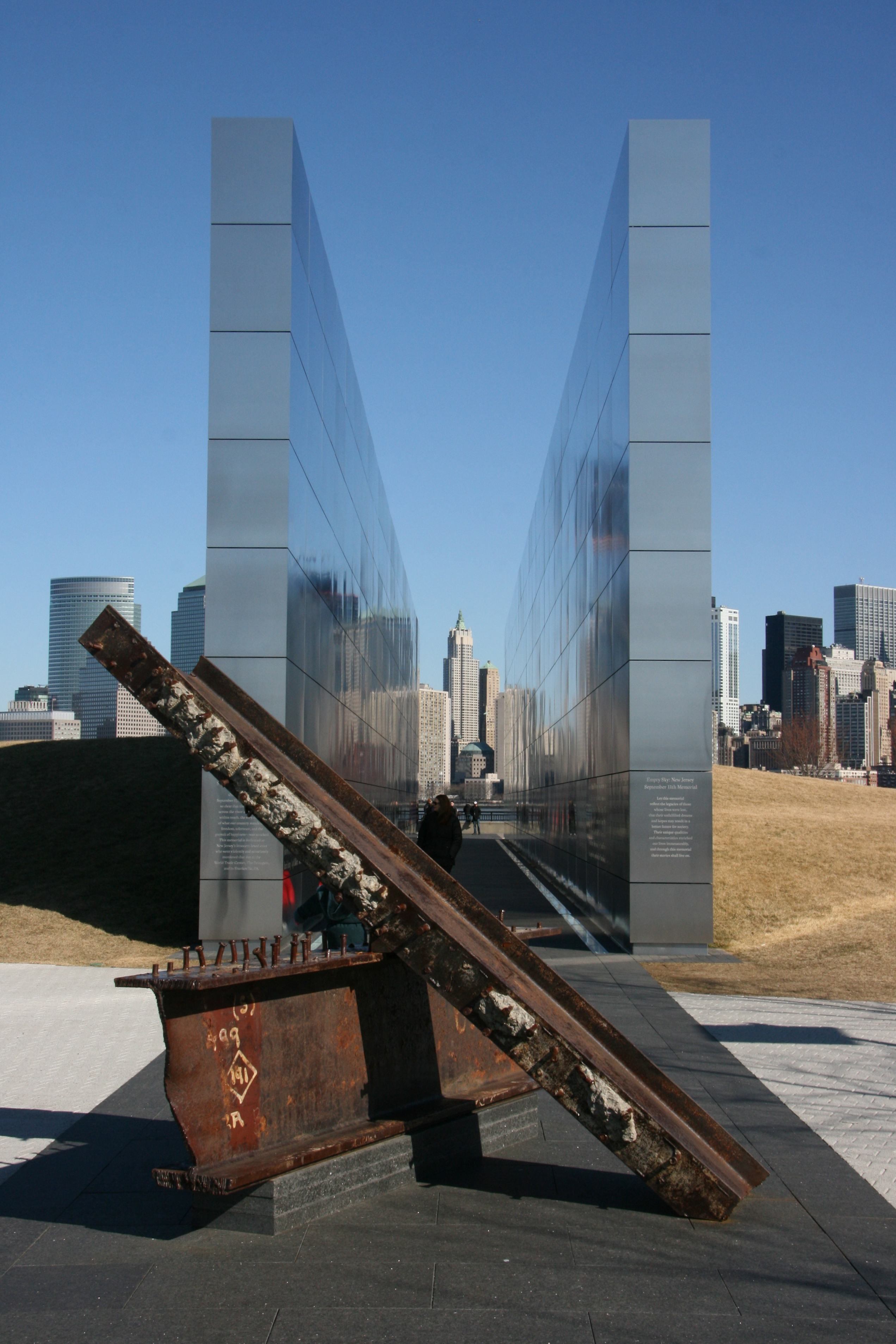
Last February, I paid the first visit of my life to the Statue of Liberty and Ellis Island. There’s a ferry to Liberty Island and Ellis Island that departs from Liberty Park, New Jersey, and at that site, next to a historic former rail station that served as a gateway to America for tens of thousands of immigrants, there now stands a stirring and fitting memorial to New Jersey’s victims of the 9/11 attacks titled “Empty Sky”.

I’m not usually a fan of the stark, industrial-modern style of memorial that has followed in the footsteps of Maya Lin’s Vietnam War Memorial, but I think what was done at Liberty Park works well.

Parallel walls, 30 feet high and as long as the Twin Towers were wide, carve out a channel that’s oriented toward the World Trade Center site. Entering the space between the walls evokes the awe-inspiring sensation of standing between the towering buildings. Meanwhile, your eye is drawn down the man-made channel toward Ground Zero, just across the Hudson — a view that tends to focus the mind.

You also find yourself in a private, contemplative space where the names of New Jersey’s 9/11 dead have been inscribed and can be read on the interior wall surfaces. I found it a fitting memorial overall — far from the cold and sterile monument one might expect from its physical description. Any possibility of that is canceled out by the pair of steel beams recovered from the World Trade Center wreckage, that sit starkly at the far end of the channel just outside the walls. If anything, the absence of human forms (one of the common characteristics of modern memorials that usually rubs me the wrong way) succeeds in evoking a sense of loss and absence — a seemingly fitting reminder of those who were taken from us that day. Also, bear in mind where this memorial sits. Anyone standing at this site on the morning of September 11th, 2001 would have had a clear view of the horror, as American Airlines Flights 11 and 175 were flown by fanatical Jihadists into the World Trade Center towers.

Empty Sky memorial and World Trade Center beams

Sighting down the channel delimited by the walls, one can see the rebuilding occurring at the World Trade Center site. One World Trade Center (formerly dubbed the “Freedom Tower”) is visible at the left edge, and 4 World Trade Center can be seen at the right.

sighting down the Empty Sky memorial, toward the World Trade Center site

Here’s what the memorial looks like from the side:

Empty Sky memorial from side

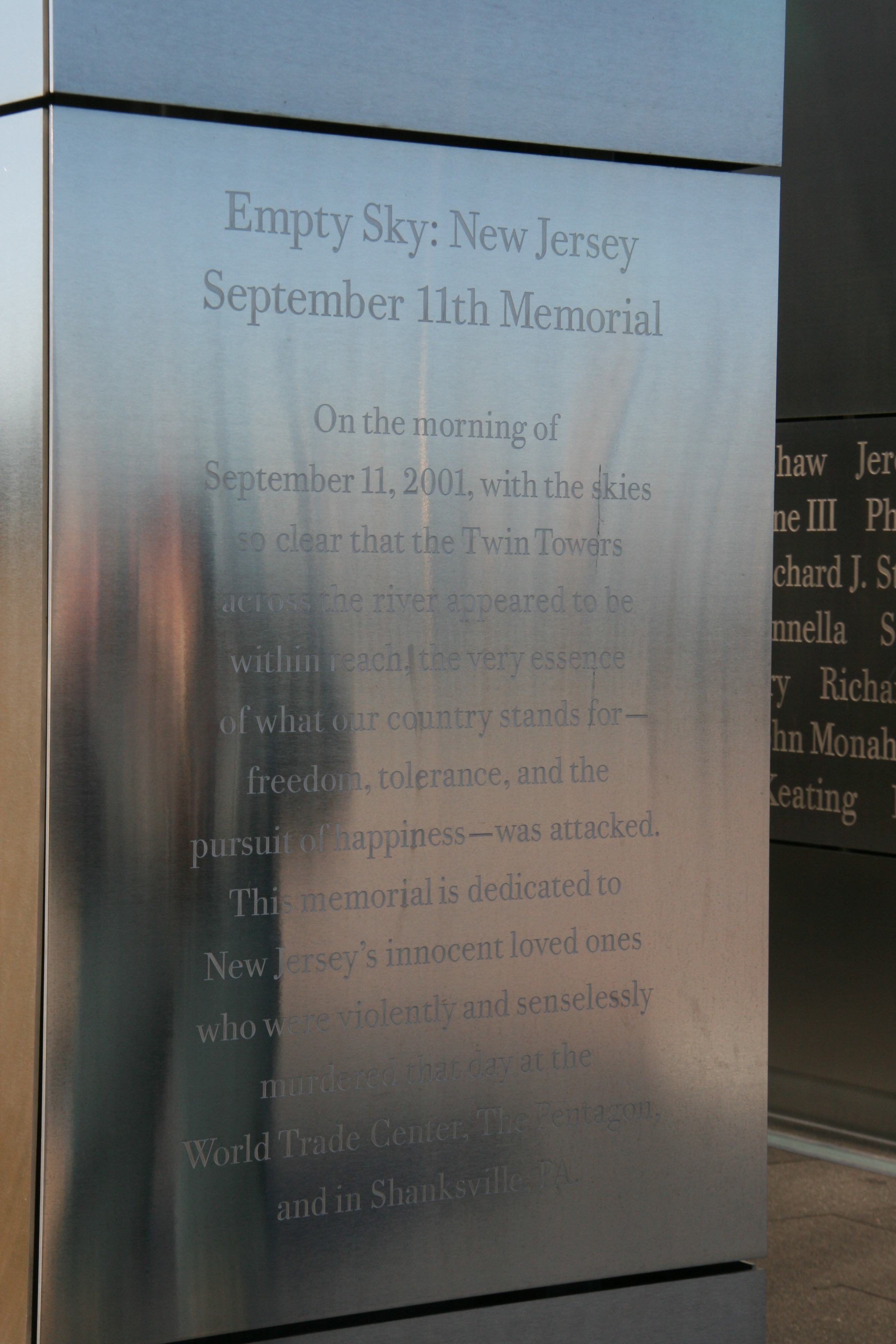
At each end, the walls are inscribed thusly:

Empty Sky memorial inscription 1

Empty Sky: New Jersey September 11th Memorial

On the morning of September 11, 2001, with the skies so clear the Twin Towers across the river appeared to be within reach, the very essence of what our country stands for — freedom, tolerance, and the pursuit of happiness — was attacked. This memorial is dedicated to New Jersey’s innocent loved ones who were violently and senselessly murdered that day at the World Trade Center, The Pentagon, and in Shanksville, PA.

Empty Sky memorial inscription 2

Let this memorial reflect the legacies of those whose lives were lost, that their unfulfilled dreams and hopes may result in a better future for society. Their unique qualities and characteristics enriched our lives immeasurably, and through this memorial their stories shall live on.

Note the fairly unflinching terms in which the attacks are described: those killed on that day were violently and senselessly murdered. Such moral clarity is too rarely seen, and welcome in my book. While it’s not clear to me how a memorial that immortalizes the victims’ names alone can succeed in helping their stories to live on, I give this design credit for getting a lot more right than wrong.

More pictures of the memorial can be found here.

Here’s what Lower Manhattan looked like from that vantage point last February, by the way:

Lower Manhattan, from Liberty Park, New Jersey, February 20, 2012

Here’s what it looked like when I visited again ten days ago, on September 1st:

Lower Manhattan, from Liberty Park, New Jersey, September 1, 2012

You can see clear progress on WTC 1 (left) and WTC 4, relative to the heights of the surrounding buildings. WTC 1 recently reached its symbolic final height of 1,776 feet. As I’ve written before though, it’s troubled me that it has taken us so long to rebuild at the WTC site, relative to what I know we’re capable of. The original World Trade Center towers opened 4 and 6 years after construction began. The Empire State Building, a smaller but still substantial high-rise project, was completed in a mere 410 days. During the Great Depression. We can still achieve such feats, if we choose to. Do we still have it in us?

top of WTC 1, September 1, 2012

Speaking of memorials: I have yet to visit the 9/11 memorial that is now open at the World Trade Center site. The need to obtain a ticket, and the advance planning that that requires, has only served to enable my hesitation about visiting. I visited Ground Zero two weeks after the 9/11 attacks, then again in November 2007 (and later posted some pictures from that day), but somehow the thought of visiting the completed memorial seems a different proposition. I just don’t know whether I can handle it without getting tremendously upset all over again. I’m not someone who needs convincing about the sorrow and grave implications of that day, and I don’t think I would find any solace there. But I know I’ll probably end up overcoming all that and visiting someday, and when I finally do, I’ll write about the experience here.

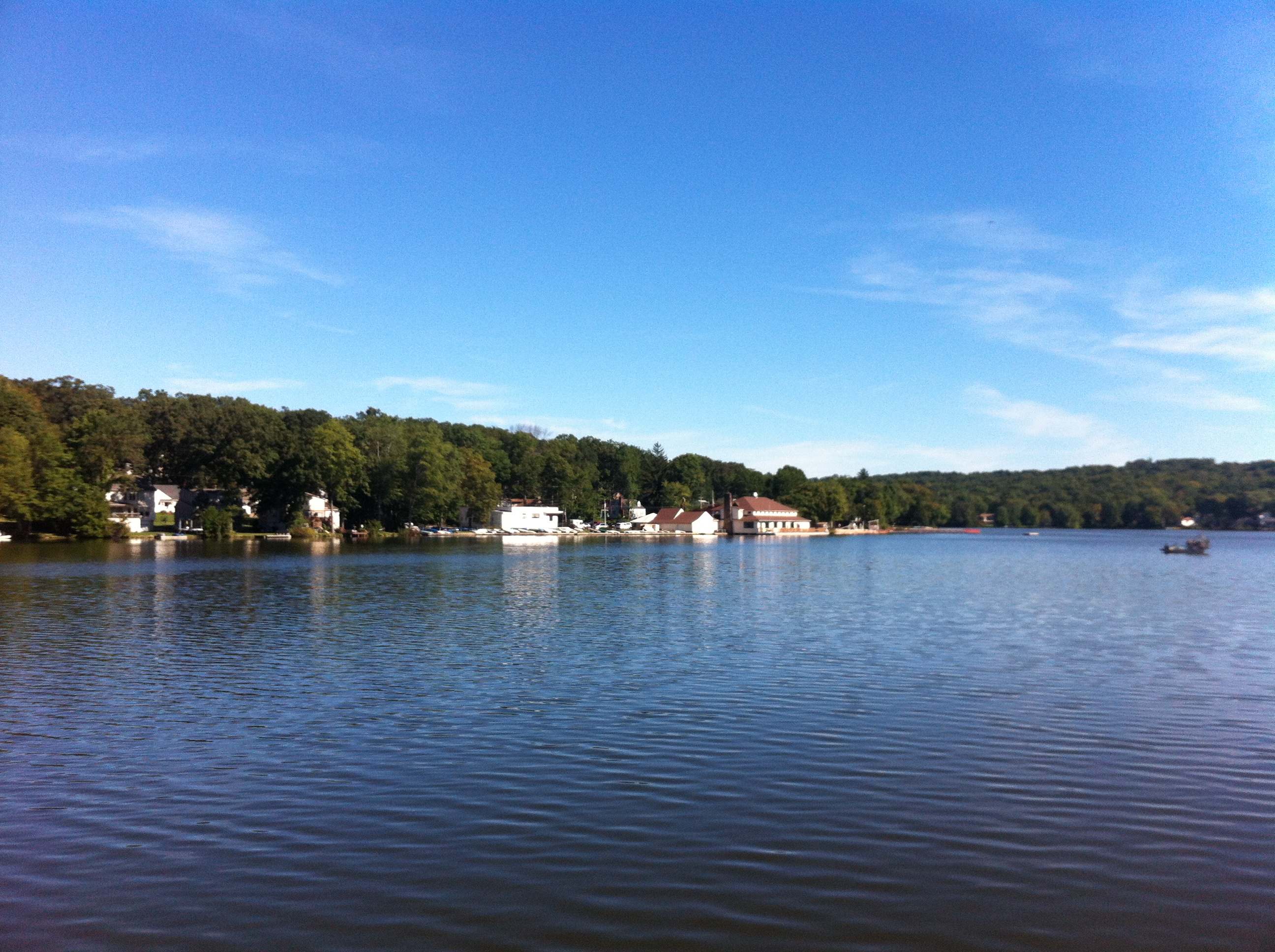
Here at the lake, it’s a crisp, clear day that can’t help but evoke one that began similarly eleven years ago.

Packanack Lake, September 11, 2012

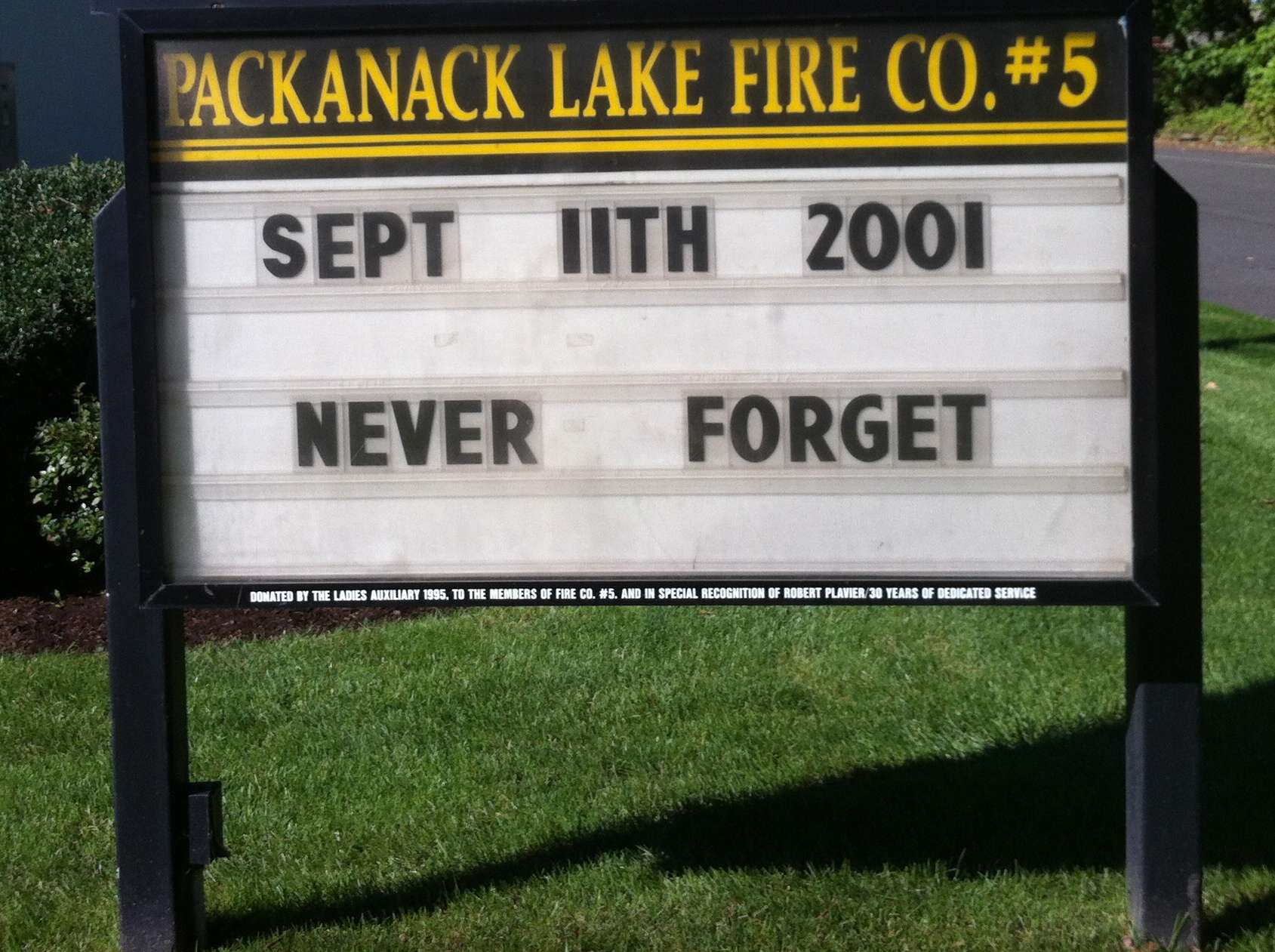
I went for a morning run, feeling grateful that, unlike so many whose lives and dreams and ambitions were cut short that day, I am still here and have the precious opportunity to continue to strive against my limits. Our local volunteer fire department has a commemorative message up. A fraternity of first responders forged in a shared willingness to run toward danger will not soon forget its fallen heroes. Nor should we.

sign at Packanack Lake Fire House, September 11, 2012

So Long, California

Tuesday, September 4, 2012

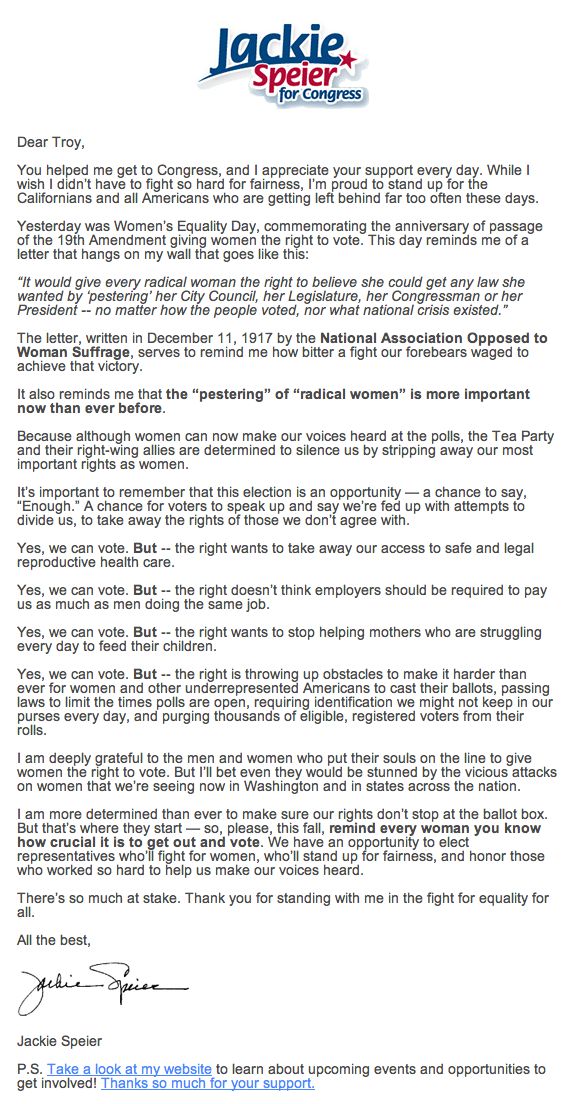
On receiving a campaign email titled “Every Radical Woman” last week from my former Congresswoman, Democrat Jackie Speier, whose mailing list seems to have mis-classified me as a supporter, I felt compelled to reply.

I suppose I might have saved my energy and let this one go — I no longer live in California, after all — but its cynical and disingenuous attempt to tar the pro-liberty Tea Party movement as somehow anti-woman, as part of the bombastic “war on women” meme that today’s Democrats seem to hope will distract from their out-of-control spending and abysmal failure on the economy, was too far beyond the pale to go unchallenged.

On a range of issues culminating in Speier’s enthusiastic support for the legislative and financial disaster known as ObamaCare, whose detractors her campaign vilified as fear-mongering extremists, I never felt Congresswoman Speier represented my positions or values. Thankfully, we are now both relieved of the representative-constituent relationship, as I explained in my emailed reply:

You may wish to update your contact list. I did not vote for you, but you may thank me for relieving you of the burden of representing me.

After 33 years in California, some of it lived as a moderate Democrat, I have given up on my beloved home state, and departed with my productivity and entrepreneurship in search of places where fiscal sanity is practiced. I have been much happier for it, and have not had cause to look back.

As one municipality after another goes bankrupt, while voters refuse to do the difficult grown-up work of reining in out-of-control spending, my only remaining hope for the state of my birth is that it may serve as a warning to the rest of the country before it is too late.

Suffrage was and remains a fine and just achievement, but it’s an irreversible milestone from which society has rightly moved on. Today’s authentically “radical women” are those who challenge the regnant orthodoxy of unsustainable, infantilizing nanny-state feminism and are routinely vilified for it. The overwrought notions that calling for fiscal responsibility somehow constitutes a “war on women”, or that the economy- and liberty-focused Tea Party represents a resurgence of anti-feminist social conservatism, are farcical and disingenuous scare tactics, and I suspect most of those who promulgate these desperate fallacies know that. If there is a war on women, it is nowhere more manifest than in persistent unemployment that disproportionately affects women -- the foreseeable result of decreasingly competitive, increasingly business-unfriendly economic policies. What will most help women is what will help us all: a return to smaller government and fiscal sustainability.

For my part, I’ve had enough of fiscal denial, and the ugly and cynical politics of fear, envy, and entitlement that have fed this crisis, having left in search of places where the pioneering American Idea still thrives. I will go wherever I have to to escape the ruinous advance of Progressivism -- a philosophy whose state mechanisms, as California’s 33rd governor aptly put it, resemble nothing so much as my newborn’s alimentary canal -- with an insatiable appetite at one end, and no sense of responsibility at the other.

I do hope California can be saved. I’m done waiting and wishing, against all evidence and common sense, for it to happen, and I leave the state to those who seem to think they know better.

You’re welcome.

Your Former Constituent,
Troy Stephens

A snapshot of the campaign email to which I replied:

'Every Radical Woman' Campaign Email, Received from Jackie Speier for Congress, 2012-08-27

Independence Day 2012

Tuesday, July 3, 2012

“Independence Day”. Let’s start by calling it that again. I’ve been trying to break myself of the “4th of July” habit, which waters the holiday down to a phrase that carries almost no meaning.

This year’s Independence Day finds me contemplating and worrying about the significance of the Roberts court ObamaCare ruling, and what it is likely to mean for the future of our Republic founded in Liberty. Have we, as it appears, chosen Safety over Liberty in a bargain that Ben Franklin warned us would yield neither, and thus forfeited the latter to encroachment by an ever-expanding central government designed to take care of us like helpless children? Some smart people who I respect say it’s not as bad as it looks, and I’m weighing their reasoning, but I have yet to feel I’ve reached any sort of confident conclusion on the matter.

That said: Never, never, never, never give up.

Here’s my slightly refreshed Independence Day playlist for this year, which I promise is more upbeat than the above. See my previous years’ Independence Day archives for other song recommendations. Enjoy!

  1. Five for Fighting, “Slice” (iTunes, Amazon)
  2. Five for Fighting, “Note to the Unknown Soldier” (iTunes, Amazon)
  3. Chris Ross, “Liberty” (iTunes)
  4. Krista Branch, “Remember Who We Are” (iTunes)
  5. Aretha Franklin, “Think” (iTunes, Amazon)
  6. Jon David, “American Heart” (iTunes, Amazon)
  7. Stuck Mojo, “I’m American” (iTunes, Amazon, blog)
  8. Rush, “Freewill” (iTunes, Amazon
  9. Madeleine Peyroux, “This is Heaven to Me” (iTunes, Amazon, blog)
  10. Ray Charles, “America the Beautiful” (iTunes)
  11. Oscar Peterson Trio, “Hymn to Freedom” (iTunes, Amazon)

ps - The venture I started last year has been progressing nicely. I’m having the time of my life, and working toward an end-of-summer launch for the app I’ve been working on. More to come!

Plzeň Remembers

Friday, May 4, 2012

This coming Sunday, May 6th, marks the 67th anniversary of the liberation of the Czech town of Plzeň by the United States Army. As you can see here, Plzeň hasn’t forgotten. Nor should we.

Every 5 years, Pilsen conducts the Liberation Celebration of the City of Pilsen in the Czech Republic . May 6th, 2010, marked the 65th anniversary of the liberation of Pilsen by General George Patton’s 3rd Army. Pilsen is the town that every American should visit. Because they love America and the American Soldier…

Photo of 'Thank You America' Liberation Monument in Plzen

Between Czech roots (my mother’s parents), memories of a 1985 visit to Plzeň, and gratitude for our veterans, the story especially touches me. It made the email rounds about a year and a half ago, so many of you are likely to have seen it already, but for any who haven’t yet, I feel inclined to pass the link along. (If that copy ever goes away, the story can also be found here, here, and here.)

Don’t miss the included story of Zdenka Sladkova, 79, who for 67 years has tended a memorial at the crash site of a KIA 20-year-old pilot Lt. Virgil P. Kirkham. She was only 14 years old when his P-47 crashed near her home town of Trhanova.

The prevailing conventional wisdom is that we’re short on friends in this world. Don’t believe it. At least not when it comes to the kinds of friends who matter most. My heartfelt thanks to our enduring friends in Plzeň and the Czech Republic.

Reading Breitbart

Friday, April 27, 2012

In reflecting on the untimely loss of Andrew Breitbart, it occurred to me that I should finally get around to reading Righteous Indignation, Andrew’s last book-form message (though I’m sure he didn’t expect or intend it to be his last) to those of us who’ve found that the same things that ate at him day and night, through the nonstop news cycle, keep us awake at night and worrying for our culture too.

Breitbart’s message, and the story of his pioneering work from the early days of Internet news reporting to the present, are inspirational. But at the moment, something else has really seized my attention. Barely two chapters in, I’ve found myself rather floored by an unexpected number of similarities between Andrew’s adolescence and my own: Andrew grew up in Brentwood; I grew up in West L.A., a stone’s throw away. He’s only a couple of years my senior, so we were there at about the same time, and experienced the same culture. We both started out as “default liberals”, vaguely motivated by a similar, culturally cultivated (and reinforced by the friends we had) mis-perception that the political Right was all about being stodgy old mean meanies who aspire to tell other people what to do. (Andrew cited his “natural disdain for the religious right, which had been the ultimate 1980s-era bogeyman”. Funny, we must have been informed by the same media narrative.) Later in life, we each came into contact with new ideas, began educating and informing ourselves without really having the benefit of guidance from (nor the company of) similarly inclined peers, and as a result moved first to libertarian, then to libertarian/“conservative” positions, only to find ourselves relatively alone in our cultural surroundings. We were both fortunate to have incredibly generous and patient parents who let us find our own paths, hanging in there even when we must have seemed all but hopelessly lost in our wanderings in search of self. My family was down-to-earth in a not-so-down-to-earth town. We largely took simple road-trip vacations. I knew Dad had voted for Reagan, but we almost never discussed politics at the dinner table. Same for Andrew on all counts. Andrew waited tables for a time; I earned my spending money working for caterers. We listened to some of the same music. We both spent time in Westwood. Both were frequent and enthusiastic movie-goers who, later in life, would become disillusioned and estranged by Hollywood’s growing cynicism, anti-Americanism, and political left turn. After college, Andrew worked for a movie production company up until the disillusionment hit him. Before college, I’d had thoughts about going into movie production (special effects for futuristic sci-fi movies were of particular interest to me), but now, years later, I’m glad that I didn’t attempt to make my career in a culture that’s become so deeply hostile to my kind. Some of the other places I’ve been have been unfriendly enough as it is.

Hell, Andrew’s family rented their motor home to John Ritter. Why, a close friend of mine used to babysit for John Ritter!

Can’t avoid saying it: Small world.

There are, of course, also plenty of differences between our early paths in life. Andrew’s college experience, which he describes as drinking his way aimlessly through Tulane and surrounding New Orleans for four years, wasn’t much at all like my own. After nearly dropping out of L.A. public high school because I hated it so damn much, then spending four years alternately working, taking UCLA Extension night classes, and doing some self-teaching in the UCLA physics library, I went to college late, but with a focus, drive, and sense of purpose that many of my classmates lacked. Where Andrew chose, under duress at the 11th hour and for lack of a more compelling option, to major in American Studies, I set out to major in physics from day one, and did everything I could to avoid distractions from my physics and supporting math work, taking courses in other departments only when required, or because I needed some less demanding classes to balance the science-work-heavy course load to which I wanted to devote my best efforts. With few exceptions, I did everything but party while I was in school. (I confess to spending some of my parents’ hard-earned tuition dollars taking a West African drumming class. I couldn’t help it. It was the lure of the Feynman mystique.)

Andrew’s awakening and the beginnings of his transformation began much earlier. Compared to him, I’ve been an embarrassingly slow learner. I lived my adolescence pretty oblivious to anything beyond the mainstream narrative that surrounded me (Democrats good, Republicans bad, though I did like that optimistic Reagan fellow, and assumed that everyone else really, at the end of the day, surely must like him and believe in America the way he did, too). A visit to a gloomy Czechoslovakia in 1985, followed by the fall of the Berlin Wall and collapse of the Soviet Union, made strong impressions on me, but I never imagined that the inherent evil of Communism was in any doubt at all to my fellow Americans. We all knew too much about the totalitarian abuses, mediocrity, shortages, and twisted, humanity-crushing culture of fear and suspicion and nonsense it produced, right?

College was where the cognitive dissonance, and perception of a world gone wrong, really began to set in for me. Focused as my coursework was on hard science, I didn’t experience the nihilism of the contemporary humanities mindset at full strength as Andrew did (thankfully), but I saw enough going on around me to begin taking notice — from pedantic PC multicultural pandering and genuflection that, while at times eyeroll-inducing, seemed more or less harmless at first, to the totem pole of designated victim groups, to a classmate in the thrall of an absurd “post-modern” anti-rationalist philosophy that denied the existence of any objective knowledge and wrote off the entirety of scientific achievement through the ages as a “social construct” of “white European males” that we had designed, you know, to help us oppress women and minorities, to the banner celebrating Cuban communist thug Che Guevara on my girlfriend’s roommate’s wall. I began to ask myself: What the ... ? How did this happen? I had been sleeping.

The funny thing is, I remember very distinctly having this feeling walking home from elementary school one day (that’s “grade school” to most of the world outside of L.A., I’ve gathered): I remember thinking about how I didn’t much like subjects such as history, that demanded lots of burdensome memorization. I preferred to stick to topics like math, where one could reason out the answers from a few logical and easily memorized foundational principles instead of having to labor to commit a great deal of loosely relatable knowledge to rote memory. And I remember being perfectly aware, even as I had the thought, that deciding to avoid the study of history to satisfy such mental laziness was not a winning proposition, for that was how we would surely end up repeating the same mistakes. I knew that worse stuff had come before, and was still happening in the world outside the bubble of freedom and prosperity that I lived in, and that by having that kind of thought I was taking the America I was so lucky to inhabit for granted and might well regret it someday. But I also assumed a sort of “end of history” future, where Freedom would of course prevail and, inexorably, expand and spread its light in dark corners to liberate more and more people across the globe. I didn’t expect life to actually call me on my lack of studious appreciation. If anyone then had tried to forewarn me of the battle I’d end up fighting as an adult — for, as Andrew described it, the “soul” of my culture — I’d have laughed them off as plainly insane. Fears of nuclear armaggeddon aside, none of the culture I took for granted seemed to be fundamentally in jeopardy.

It was only after college that I really started to move, gradually, to the right of center. I knew something was wrong with the cultural self-recrimination and cynical attitudes I had encountered, but I had no awareness of similar thinking outside my own until after 9/11, when I eventually (not until a couple of years after 9/11, if I recall correctly) stumbled upon Instapundit and, through Glenn’s blog, The Drudge Report, Steven Den Beste’s "USS Clueless", Bill Whittle’s incomparable "Eject! Eject! Eject!", and other center-right sites and blogs. Excepting the Paul Harvey morning broadcast that my Dad and I had always found amusing while waiting in our parked car for my school bus to pick me up when I was 13 or 14, I had no awareness of talk radio until I started listening to the Instapundit and Pajamas Media podcasts sometime around 2006, I think — eventually learning about Breitbart and what he was doing as part of that. As I said: slow learner.

None of this should be construed in any way as delusions of Breitbartian grandeur. Like the thousands of kindred spirits he so inspired that they enthusiastically declared “#IAmAndrewBreitbart” in Andrew’s defense, when the news of his passing brought forth torrents of Breitbart-hating Twiter vitriol of the very sort that Andrew was known for gleefully retweeting, I feel humbled by his achievements and moral courage — a courage to enter the fray for the sake of what matters, vilification by his bitter detractors be damned, that I can only hope and aspire to find and cultivate in myself. Yet I also feel struck by the notion that, but for the tweaking of a few details here and there, it’s not all that far fetched to imagine that each of us could easily have ended up going down the other’s path, living the other’s life. Maybe that’s overstating it. But I’m feeling a more personal connection to the man’s life and experiences than I was expecting to, and it’s caught me a little off guard, and made me deeply sorry that I didn’t have the chance to meet Andrew and get to know him that others did. What I knew of Andrew through his work had me intrigued and inspired me as it was. Now I fully expect to be glued to this book for a stop-for-nothing straight-through read.

Speaking of Breitbart, and of Instapundit, this is apropos and poignant: Breitbart is Here: The Video.

I’ve also found it heartening to see this around:

Banner: Keep calm. Breitbart expects you to carry on.


Not Dead, Just Resting

Actually, I’ve been doing anything but resting, but this way I get to make a gratuitous parrot sketch reference. Sorry. Couldn’t resist.

As my IM status message has indicated persistently for months now, I’ve been “deeply immersed” in my startup venture, which has kept me away from blogging and will likely continue to do so through most of the summer. I miss writing, and there are topics constantly on my mind that I’m chomping at the bit to get to, but I have to prioritize getting a first revenue-generating product finished, polished, and shipped, as my ability to continue doing what I’m doing hinges on demonstrating to my board of directors (read: wife) that I can actually make a respectable income pursuing my pet pipe dream. (I’m also racing against the clock of another “project” we have in the pipe: Our second child is due to arrive in June (!), and I want to be ready to give that venture my full devotion!)

The great news work-wise: I’ve been having the time of my life, am incredibly excited about what I’m working on, and can’t wait for the world to see it. The opportunity to develop an app of my own design, that I myself would love to have and be able to use, has been a reward in itself. Each morning when I climb the stairs to The Office (read: the spare room where I have my workspace set up), coffee in hand, I get to enjoy the feeling and knowledge that I’m doing exactly what I want to be doing. For that, there is no substitute, and I am doing everything I can to make the most of it and ensure that I get to continue making great and useful things.

Part of the cost of the project is that it’s going to continue to be mostly quiet around here until I ship. I am really looking forward to beginning to write and post again as soon as I can, but until that becomes something I can start spending time on, I’ll mostly be limited to checking in and micro-posting on Twitter. So look for me there for now, but stay tuned: I’ll be back!


Losing Václav Havel

Wednesday, December 21, 2011

This week saw the loss of two of humankind’s best, followed by the departure of one of the world’s worst villains. I’ve written a brief reflection regarding Václav Havel below, and will try to get to commenting on Christopher Hitchens’ and Kim Jong-Il’s passing when I can manage to seize a bit more time. (Joshua Treviño probably framed the odd trio of passings best: “I’d like to think God let Havel and Hitchens pick the third.”)

Václav Havel, Czech playwright and dissident who inspired millions with the courage of his convictions and went on to lead a liberated Czech Republic after the 1989 fall of Communism across Eastern Europe, succumbed to a long respiratory illness and passed away last Sunday. As one who loves and celebrates liberty, and whose mother’s parents were Czechs who emigrated to France in the 1920s, I feel a strong appreciation of Havel’s acts of steadfast courage in the face of gloomy odds. The Czech story in the 20th century was an especially sad one: Just as Czechs began to loosen the shackles of over two decades of self-inflicted communism during the Prague Spring of 1968, Soviet forces invaded and imposed a stricter communist regime that halted the liberalization. This, in a once free and democratic nation.

I will always remember a several days’ visit with my parents and sister to what was still “Czechoslovakia” in 1985, during which we managed to see Prague and a bit of Plzeň, and visit some extended family. The Prague of the time was the gloomiest place I had ever been, gray and desolate with the scaffolding and rubble of languishing construction projects, and their accompanying “5 year plan” signage, everywhere. Restaurants were nearly empty, and it seemed as if people rarely left their homes. One cousin, who worked for a television station, was afraid to be seen meeting with Americans. Years later, we heard of his disappearance; the family suspected he had been taken to a labor camp, as commonly happened to political dissidents during that time. Everywhere along the roads, propaganda billboards proclaimed the virtues of Communism, or the vices of Capitalism, in their characteristic style, yet the world around them seemed still, unmoving, almost abandoned. (I recall feeling my stomach sink years later, on seeing a familiar Czech anti-capitalist poster in the home of a left-leaning work colleague — another of the many signs I’ve seen, of the Western left’s misguided admiration for the malignant ideology of communism.) I recall the generous and unreserved hospitality of cousins who welcomed us into their homes, and one cousin’s fascination with the under-the-hood workings of what we thought of as our very simple, run-of-the-mill rental car — a Ford sedan with a modest 4-cylinder engine. It was a fascinating marvel to him, like nothing that the state auto manufacturer, Škoda, produced. And perhaps most of all, I remembered the presence of armed soldiers throughout the country, and in particular guarding the borders, where they searched the trunks of cars not only entering but leaving the country. My teenage angst was put into its proper perspective by contact with people who did not enjoy the freedoms and standard of living that I foolishly took for granted. I remember thinking, if one was ever to feel so gloomy about the world as to think life was not worth living, it would be a far better thing to risk one’s life helping people who wished to to escape a place like this. Within years, that kind of action became unnecessary. The collapse of Soviet communism gave Czechs and Slovaks another chance at freedom, and they seized it as well they should. I had the opportunity to return to Prague in 2005, for a few days after Christmas, and it gave me great joy to see the city revitalized, alive, thriving, and free. For leadership that helped make that dream a reality, and courageous persistence that kept a candle of hope lit through the many dark years before it could be realized, today’s free Czechs will forever be in Havel’s debt. The world has too few who share his deep devotion to freedom and commensurate dedication to advancing it, and he will be greatly missed.

Two noteworthy Havel quotes from my Quotes page:

On economics:

Though my heart may be left of centre, I have always known that the only economic system that works is a market economy… This is the only natural economy, the only kind that makes sense, the only one that can lead to prosperity, because it is the only one that reflects the nature of life itself.

On grappling with evil:

Evil must be confronted in its womb and, if it can’t be done otherwise, then it has to be dealt with by the use of force.

Rob Long on the Decline of Print Media

Tuesday, December 20, 2011

A great 98th podcast episode featuring Insta-guest Glenn Reynolds (whose delightful and informative blog I love every bit as much as our Ricochet hosts do) ends with some particularly insightful comments by Rob Long. Starting around 59 and a half minutes:

I think what hurt these magazines [(Time and Newsweek)] is Reagan. Because when Reagan was elected and did well, all of these journalists went nuts. Now Hugh Sidey used to write a very pro-Reagan column for Time. … And the idea that you would have a thoughtful, kind of middle-of-the-road wise man journalist writing a column for any one of these magazines that was not knee-jerk partisanship is … literally inconceivable. They all decided with Reagan that they needed, now … their job was to try to reform the electorate. And you could see it. You could see it in the collapse of the big media titles when they tried to reform the electorate, to try to teach you a lesson: You voted wrong. That … the electorate just kind of turned them off and people stopped reading. They stopped reading those magazines. They stopped reading the newspaper when the newspaper became homework … for your soul … instead of: telling me what happened in my neighborhood today.

On journalism then vs. now:

These were Ivy League weeklies … Newsweek and Time are staffed entirely by Harvard and Yale students. But they didn’t have the sense of trying to tell you … why you were wrong, and why you were stupid … the advocacy journalism which came up … really, began in the 70s, but I think really hit its stride in the 80s under Reagan. This idea that you need to be corrected. And the people reading this thought, “Well, I don’t really need to be corrected.” And then you saw the magazines as they desperately tried to come up with something else — was it more show business, more lifestyle stuff, more trend pieces. They tried to do everything they could, because they couldn’t report the news, because it was too obvious what they were trying to do. You look at a paper like the L.A. Times — the L.A. Times is … the dead twin of the New York Times. The New York Times succeeds because it has fantastic feature sections, right? The New York Times succeeds because on Thursdays about style, Wednesdays about food … and Fridays about escapes. It has these great sections that people want to read, despite the front section. And they’ve done that very successfully. But everyone else … they forget the Hugh Sidey model, which is just … everything doesn’t have to be corrective of Conservatives.

The mainstream just wants to know what’s going on in the world, and doesn’t need to be told, over and over again, that Conservatives are bad, and that Liberals are good. They just … they don’t believe it, so it seems like a comic book to them.

As Glenn would rightly advise: Listen to the whole thing!

I’m reminded of an older man I once met, whose eyes beamed with pride on relating to me that his son had gone into journalism “to change the world”. I smiled and said nothing, not wanting to rob this nice fellow I barely knew of a notion that was clearly a source of great happiness to him, but in my head I had to wonder: Did his son choose the right career for that? And: what are the implications of conflating the business of reporting facts with the pursuit of advocacy journalism?

Bill Whittle's Voter's Guide to the Republican Party

Not to be missed: Bill Whittle’s latest and greatest Firewall. Everything you wanted to know about those mean, nasty, evil, really not very nice Republikkkans, but were afraid to ask:

(via Phineas at Public Secrets, care of @sistertoldjah)

V.I. Day 2011

Tuesday, November 22, 2011

In 2008, blogger “Zombie” published a thoughtful, well-reasoned post discussing the conditions for victory in Iraq, and calling for November 22nd to be observed as “Victory in Iraq Day”. Continued progress and relative stability over the three years since seems to me to have vindicated that judgment, and in line with what I wrote on the occasion that year, I think we ought to carry on the tradition. The U.S. and her allies achieved what many vehemently declared was impossible, ousting one of the world’s worst dictators, liberating the Iraqi people, and planting the seeds of freedom and representative democracy in what has been one of the most politically troubled and volatile regions of the globe. Today’s Iraq has its challenges and problems, to be sure, but it is a place far more full of genuine hope than it had been under two decades of Saddam’s brutal dictatorship, and stands as a stark and unflattering counterexample to the remaining dictatorships that surround it, have acted to undermine it, and feel their grip on power threatened by its very existence. Those are all things to be grateful for and to celebrate.

Even President Obama, who as a senator vigorously opposed what he declared to be an ill-motivated, ill-conceived, and unwinnable Iraq war, and as a candidate opportunistically vilified the war and the Bush administration, promising an immediate withdrawal of our troops if elected, no matter the consequences, has had to quietly concede that the U.S. won the very war he campaigned against. Once in office, and I suspect apprised of facts and perspective that only presidents and their military advisors have access to, he scrapped his promises of immediate and unconditional retreat and defeat to embrace the same overall policies and drawdown plan of the Bush administration that he previously demonized.

The Bush administration didn’t take it upon itself to declare victory, and it was clear that neither candidate Obama nor the press were about to do any such thing. It was up to others to do so, and I’m grateful to Zombie and the participants in 2008’s V-I Day for leading the way.

Victory in Iraq Day banner

I’m not one to focus on the negative, but there is something I hope will not be forgotten about this war, that I fear history books will not amply record: the way that victory was achieved despite the most intense vilification of American conduct and motives that I have seen in my lifetime. The opposition brought their biggest rhetorical guns to bear, some among them stopping at nothing and accusing us of the most vile, malevolent intentions. We were charged by some with going to Iraq to steal their oil, to claim the land as a permanent colony of our vast, overbearing Empire, or simply for the implicit joy of killing dark-skinned people. There are people for whom it is a foregone conclusion that such actions are clearly and exactly what the United States is all about, for whom we are the exact polar opposite of all that we claim to stand for, because in order for those people to win hearts and minds it must be made to be so. The record of our actual conduct proved otherwise, casting our soldiers’ actions in start contrast with the brutality of foreign fighters who committed themselves to the failure of the Iraqi project at all costs, deliberately inflicting the kind of mass civilian casualties that the United States takes greater pains than any combatant in history to avoid. Sadly, history’s record will not prevent the same accusations from being endlessly recycled. We will fight identical smears again in future conflicts — I feel sure of it — and we had therefore best learn from this experience and be mentally prepared to battle the same calumnies again.

As I wrote on my recently added “Welcome” page, and meant it: I feel deeply, humbly grateful and indebted beyond capacity for adequate repayment to the men and women of the United States armed forces, and equally so to our truest friends in this world, the soldiers of our stalwart allied nations, who daily risk everything they have in this brief life for the liberty and safety of others, setting aside even their own. Let there be no doubt: I want them to have the full support that their risk and sacrifice merits, and I want them to be given every chance to succeed that they ask of us — precious little to expect, I think, in return. They have my sincerest admiration, and with remarkably few exceptions that serve to prove the rule, I am deeply, deeply proud of their demonstrated ethics, courage, fairness, generosity, resourcefulness, and professional conduct as our emissaries in hostile lands. The precious, fragile free society that we so often take for granted is the very thing they are risking all to preserve and defend, and they should have our heartfelt gratitude.

Marines passing out Spirit-of-America-provided school supplies in Ramadi, Iraq

To those who risked all to make Iraq’s liberation possible, and to those who lost all making it happen, may you forever have the gratitude of the freer world you left behind. You are the best of us, in my book, and we are lucky to count you as our fellow citizens.

US and UK troops make preparations in Kuwait, 2003

US marine flying colors, Kuwait, 2003

the famous toppling of a Saddam Hussein statue

For additional perspective, see Bill Whittle’s September 2011 “What We Did Right,” which, among its survey of the decade since the 9/11 al Qaeda attacks, examines the results of our intervention in Iraq.

Progress!

Monday, November 14, 2011

The three weeks since Launch Day have been incredibly fun and exhilarating. I’ve been so deeply immersed, making satisfying, design-validating progress on my first project, that you’ve scarcely heard a peep from me here. OK, my solo time hasn’t quite been the blogging Renaissance I had planned for, but it’s exactly what I need to be doing, and I don’t want to risk breaking the fantastic momentum I’ve got going. It’s been delightful, amazingly productive, and an absolute rush.

At this stage, I can only reveal that I’m designing and implementing what I believe will be some truly neat and groundbreaking software for Mac OS X. Believe me, I can’t wait to be able to announce more than that — I’ll announce it with great enthusiasm, when the time is right. Meanwhile, I thought I might mention a bit about why I’m having such fun working on this.

A big part of what makes the development process so rewarding, and makes what I’m attempting even possible for a lone developer to achieve, is the superb set of system capabilities and developer technologies that are available to leverage on the Mac platform, which fall under the broad marketing-label umbrella of the “Cocoa Frameworks”. As I mentioned in a comment on Ricochet, these technologies have quietly revolutionized the economics of software development, breaking down barriers and former notions of what a single engineer or small team could aspire to accomplish. I’ve been working with these technologies for about fifteen years now, enjoyed the privilege of working on them for the past nine and a half, and now am applying and synthesizing everything I’ve learned into some great new stuff that I believe will empower users in very exciting ways. With due acknowledgment of what a thrill it was hacking Apple ][s and PCs at the assembly-language level back in the 80s, working with this stuff is probably the most fun I have ever had programming.

The best thing of all about working with the Objective-C language and Cocoa Frameworks at their full potential, is that it isn’t just cheap rapid prototyping that leaves you with a long way to go to a robust, production-quality end result. You can achieve all the benefits of quick development without having to write a lot of temporary code that you’ll just end up discarding later — analogous, perhaps, to the temporary support scaffolding that a carpenter or stone mason might have to build to get a job done. If you stick to the right path (which isn’t too hard to do), you can begin to realize a design with quick-turnaround results, while faithfully modeling the things you’re working with in uncompromising full generality, or a subset thereof driven by immediate needs, that can be readily extended to full generality without having to discard progress and backtrack. All the while you’re making progress that counts. That in itself is an exhilarating feeling.

I don’t know whether the foregoing communicates much to those who haven’t written software before. Some may be relieved to hear that it’s as technical as I’m likely to get on this blog. I just wanted to try to convey some sense of how fun and exciting this endeavor is to me — in part because this is the “distraction” that’s going to keep me off the radar for spans of time, though I will do my best to set aside some time for blogging when I reasonably can.

I leave you with an entrepreneurial song of the day: “Prime Mover” from Rush’s 1987 Hold Your Fire. I discovered this one around the time my son was born a couple years ago, and also think of it as a hard-to-beat optimistic anthem for a new life. A definite favorite of mine. Enjoy!

Prime Mover

Basic elemental instinct to survive
Stirs the higher passions
Thrill to be alive

Alternating currents in a tidewater surge
Rational resistance to an unwise urge

Anything can happen…

From the point of conception
To the moment of truth
At the point of surrender
To the burden of proof

From the point of ignition
To the final drive
The point of the journey is not to arrive

Anything can happen…

Basic temperamental filters on our eyes
Alter our perceptions
Lenses polarize

Alternating currents force a show of hands
Rational responses force a change of plans

Anything can happen…

From a point on the compass
To magnetic north
The point of the needle moving back and forth

From the point of entry
Until the candle is burned
The point of departure is not to return

Anything can happen…

I set the wheels in motion
Turn up all the machines
Activate the programs
And run behind the scene

I set the clouds in motion
Turn up light and sound
Activate the window
And watch the world go ‘round

From the point of conception
To the moment of truth
At the point of surrender
To the burden of proof

From the point of ignition
To the final drive
The point of a journey
Is not to arrive

Anything can happen…